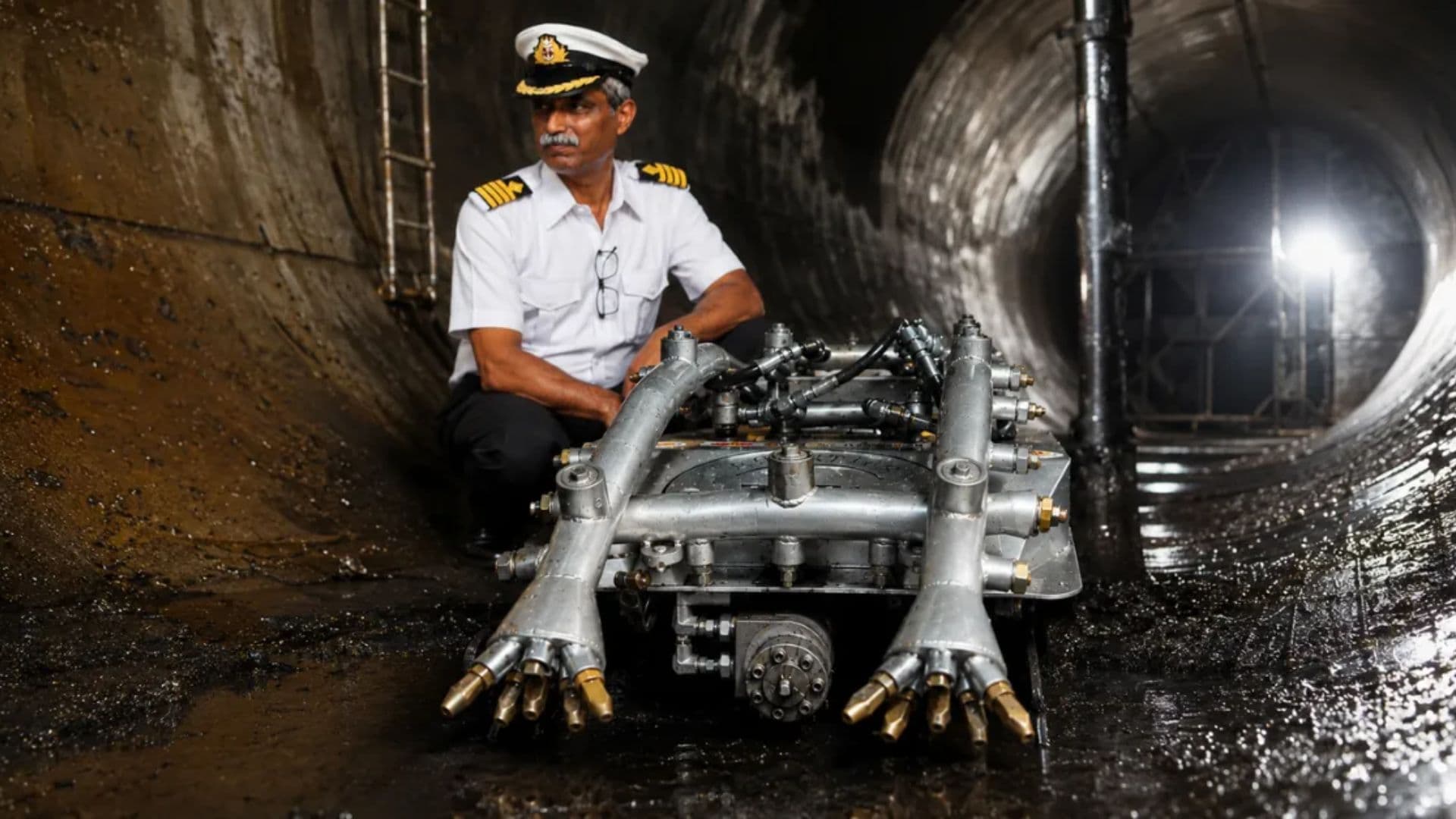
Captain DC Sekhar made a quiet promise to himself inside a dark, sludge-covered oil tank in the 1990s. Nearly three decades later, BetaTANK Robotics is turning that promise into a commercial product.
Twenty metres below the deck of an oil tanker, the air carries hydrogen sulphide, oxygen levels can drop without warning, and every surface is coated in thick black sludge. Captain DC Sekhar entered spaces like this more than 150 times during his Merchant Navy career. He always knew the work was dangerous. What troubled him was that it had to be done by people at all.
“I remember thinking in the mid-1990s,” he says. “It’s been over 30 years since humans landed on the moon. Why are we still sending people inside oil tanks to clean sludge?”
The Company He Eventually Built
In 2019, after carrying that question in his notebooks for nearly three decades, Sekhar founded BetaTANK Robotics following a discussion with Oil India Limited, which invested Rs 2.55 crore to support the development of the first robots. The startup, now holding an Indian patent for its technology, has built hydraulic robots that clean petroleum and petrochemical storage tanks remotely while operators guide them safely from outside using a live camera feed.
Why Hydraulics and Not Electronics
The choice of hydraulics is deliberate. Inside petroleum tanks, even a small electrical spark can trigger an explosion. BetaTANK’s robots use pressurised fluid instead of motors, meeting Zone 0 international certification, one of the highest safety standards for continuously explosive environments. The only electrical component is an explosion-certified camera.
A Different Approach to Sludge Removal
Most competing systems use vacuum suction, which Sekhar compares to drinking thick ice cream through a straw. BetaTANK pushes sludge into an onboard pump and ejects it at five to ten bar discharge pressure, allowing thicker material to be moved more efficiently.
The startup is currently pre-revenue, with first commercial deployments expected in the Middle East. Robots for underground petrol station tanks, petrochemical plants, and high-temperature foundries are also in development, all aimed at the same mission: removing human beings from the most dangerous workplaces on Earth.