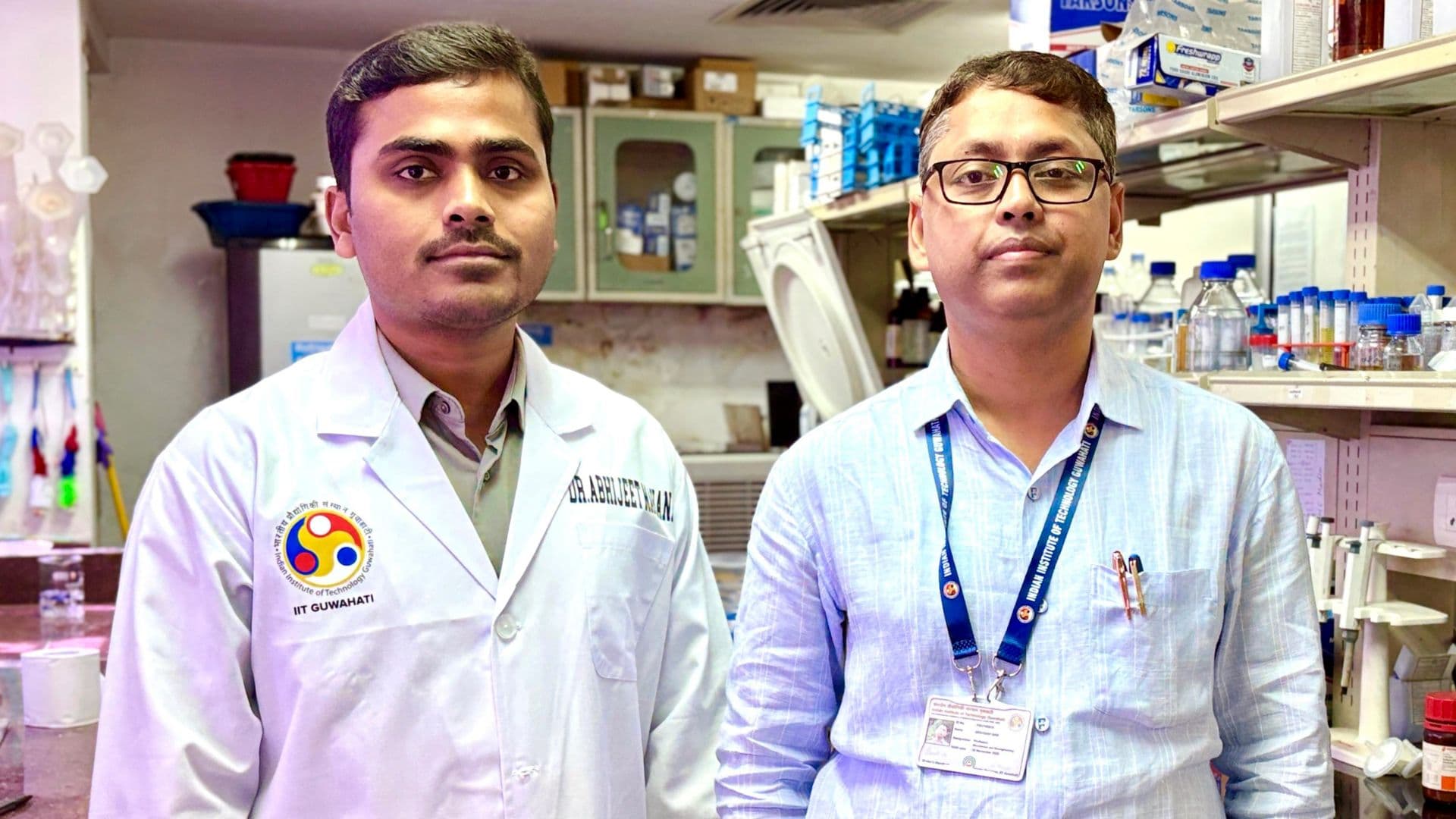
The biological process targets contamination from battery recycling units, a major contributor to India having over 275 million children with elevated blood lead levels
Lead pollution remains one of India’s least discussed public health emergencies. A 2020 UNICEF and Pure Earth report found that the country is home to over 275 million children with elevated blood lead levels, nearly half of India’s child population. Wastewater from battery recycling units, which carries high concentrations of dissolved lead into rivers and soil, is a major driver of this contamination. Researchers at IIT Guwahati believe they have found a cleaner way to address it.
The Science Behind the Process
The research, led by Professor Pranab Kumar Ghosh of the Department of Civil Engineering along with research scholar Sreekanth Yadav Golla, was published in the Journal of Environmental Chemical Engineering. Conventional treatment plants rely on chemicals to remove lead from wastewater, a process that generates large volumes of lead-filled sludge requiring careful disposal, with the risk of the lead eventually leaching back into soil and water.
The IIT Guwahati team instead used sulphate-reducing bacteria, organisms that thrive without oxygen, to convert sulphate in wastewater into sulphide. That sulphide then reacts with dissolved lead to form lead sulphide, a stable solid mineral that can be removed from water far more easily than dissolved contamination.
Training Bacteria to Survive Toxic Conditions
The biggest obstacle was keeping the bacteria alive in wastewater that is highly acidic and laden with heavy metals, conditions hostile to most living organisms. The researchers solved this by gradually acclimatising the bacteria to increasingly extreme conditions, essentially training them step by step to tolerate the very water they were meant to treat.
The approach worked. The biological reactor successfully removed lead and converted it into stable lead sulphide while producing significantly less sludge than chemical methods. Leaching tests on the leftover sludge showed only minimal lead release, with concentrations staying below regulatory limits, making the waste far less likely to recontaminate soil or groundwater.
Researchers say the process could extend to mining, smelting, and metallurgical industries, with future work focused on improving cost efficiency and exploring metal recovery from treated waste.