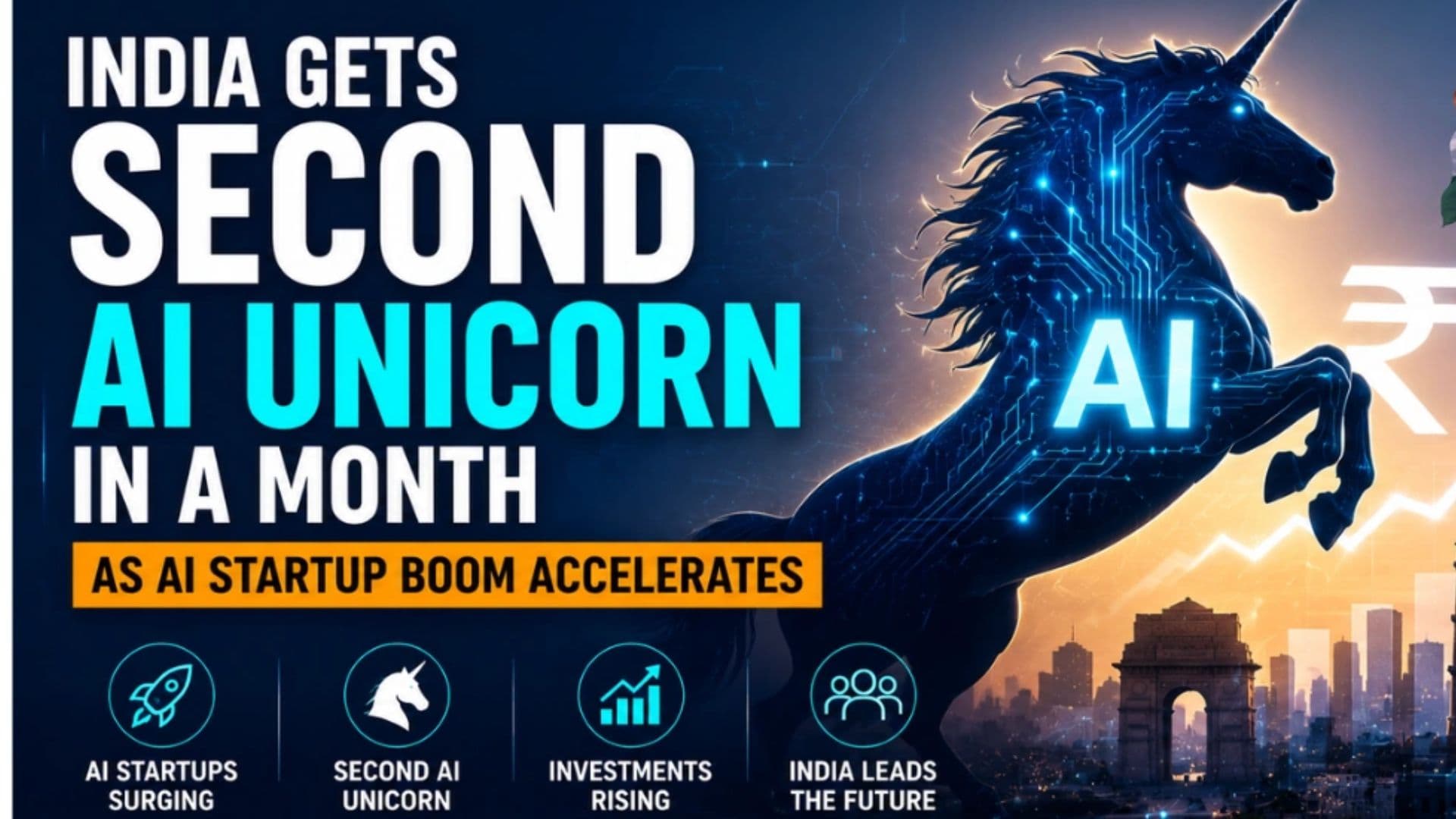
Emergent’s Series C comes exactly a month after Sarvam crossed the billion-dollar mark, prompting cautious optimism that India is finally entering the global AI race on its own terms
India has produced two AI unicorns in the space of a single month, a milestone that analysts are treating as a meaningful signal even while cautioning that it is still early days for the country’s broader AI ambitions.
Bengaluru-based vibe-coding startup Emergent raised $300 million in a Series C round on Wednesday, valuing the company at $1.5 billion. The round was led by Creaegis, a Bengaluru-based investment firm, and joined by Claypond, a family office, and Californian fund Sentinel Global. Existing investors Khosla Ventures, SoftBank Vision Fund 2, Lightspeed, and Y Combinator also participated.
What Emergent Actually Does
Founded a year ago, Emergent allows users to build software applications through natural language prompts rather than traditional coding. The company says approximately 70% of its users have no prior coding experience, and that 12 million apps were built on the platform in the past year by small business owners and solo entrepreneurs. Co-founder and CEO Mukund Jha described the platform as built specifically for the non-technical entrepreneur.
The Month That Changed the Narrative
Emergent’s raise follows Sarvam, India’s full-stack sovereign AI company, which secured $234 million at a $1.5 billion valuation exactly a month earlier. IDC Asia Pacific’s head of AI research noted that nearly half of Indian enterprises are already testing agentic AI solutions, describing the pace of experimentation as unusually fast for a market of this size.
The Honest Assessment
India has some catching up to do in the global AI race. The country doesn’t make world-class chips at home. It hasn’t built a foundation model that can stand toe-to-toe with big US or Chinese systems. Even its data center capacity falls short compared to what AI leaders have. Counterpoint Research experts say India needs at least three or four more years before its AI ecosystem really starts to take off on its own. Having two AI unicorns is encouraging, but analysts are clear: those big valuations don’t mean India’s turned a corner just yet.