A dispute over an AI-generated solution to the Navier-Stokes problem raises questions about credit, transparency, and the role of AI in mathematics.
OpenAI is facing growing criticism from mathematicians after claiming that an AI system solved the long-standing Navier-Stokes problem, one of the seven Millennium Prize Problems. The development has become less about whether AI can assist with difficult mathematical questions and more about how such breakthroughs are produced, verified and credited. A group of 25 prominent mathematicians has signed an open letter expressing concern about the growing influence of AI companies on mathematical research.
The dispute has also brought attention to OpenAI’s decision to withdraw its support for a mathematics event at the California Institute of Technology, adding another layer to the tensions between the company and parts of the academic community.
Navier-Stokes claims fuel debate.
The Navier-Stokes equations are fundamental to fluid dynamics and have remained one of mathematics’ most challenging unresolved problems for decades. OpenAI says its AI system produced a solution using thousands of AI agents, a claim that has attracted considerable attention but also scepticism among mathematicians.
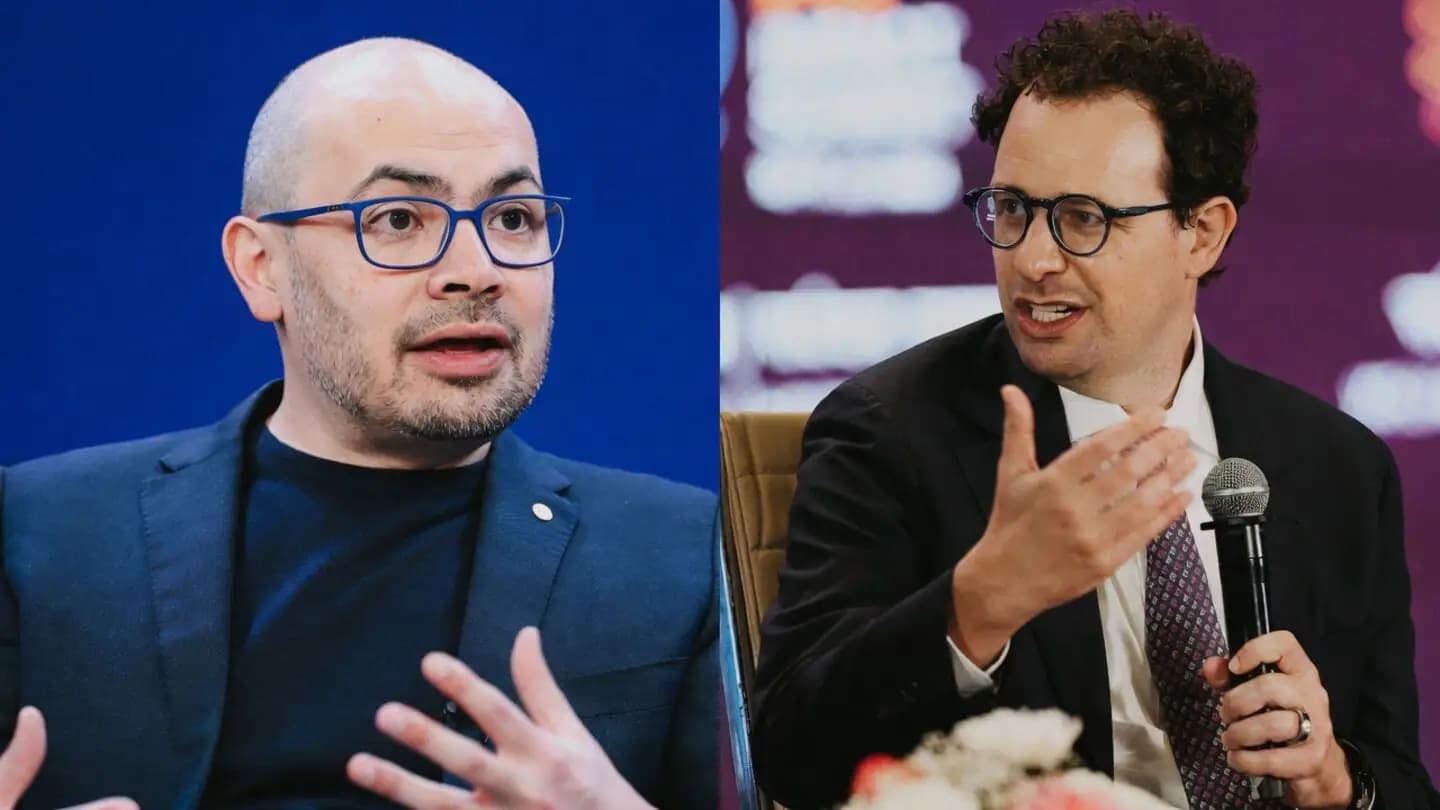
The controversy intensified after mathematician Tristan Buckmaster, who had been working on related research with Anthropic researcher Levent Alpöge, raised concerns about the timing and attribution surrounding OpenAI’s work. OpenAI has disputed suggestions that it improperly used Buckmaster’s research.
Questions over AI and academic credit.
The episode reflects a broader concern within mathematics about the growing use of generative AI in research. Unlike many technology fields, mathematics places considerable importance on originality, rigorous proof and the development of ideas that can be independently examined.
Some researchers worry that AI companies, with access to enormous computing resources, could increasingly move faster than academic teams while controlling the systems and infrastructure used to produce new results. At the same time, AI’s ability to explore complex mathematical possibilities could become a useful research tool when combined with human expertise and independent verification.
Whether OpenAI’s claimed breakthrough ultimately receives broad mathematical acceptance will depend on independent scrutiny of the proof. For now, the controversy illustrates the growing friction between the rapid development of AI systems and disciplines built around slower, collaborative and highly verifiable research processes.