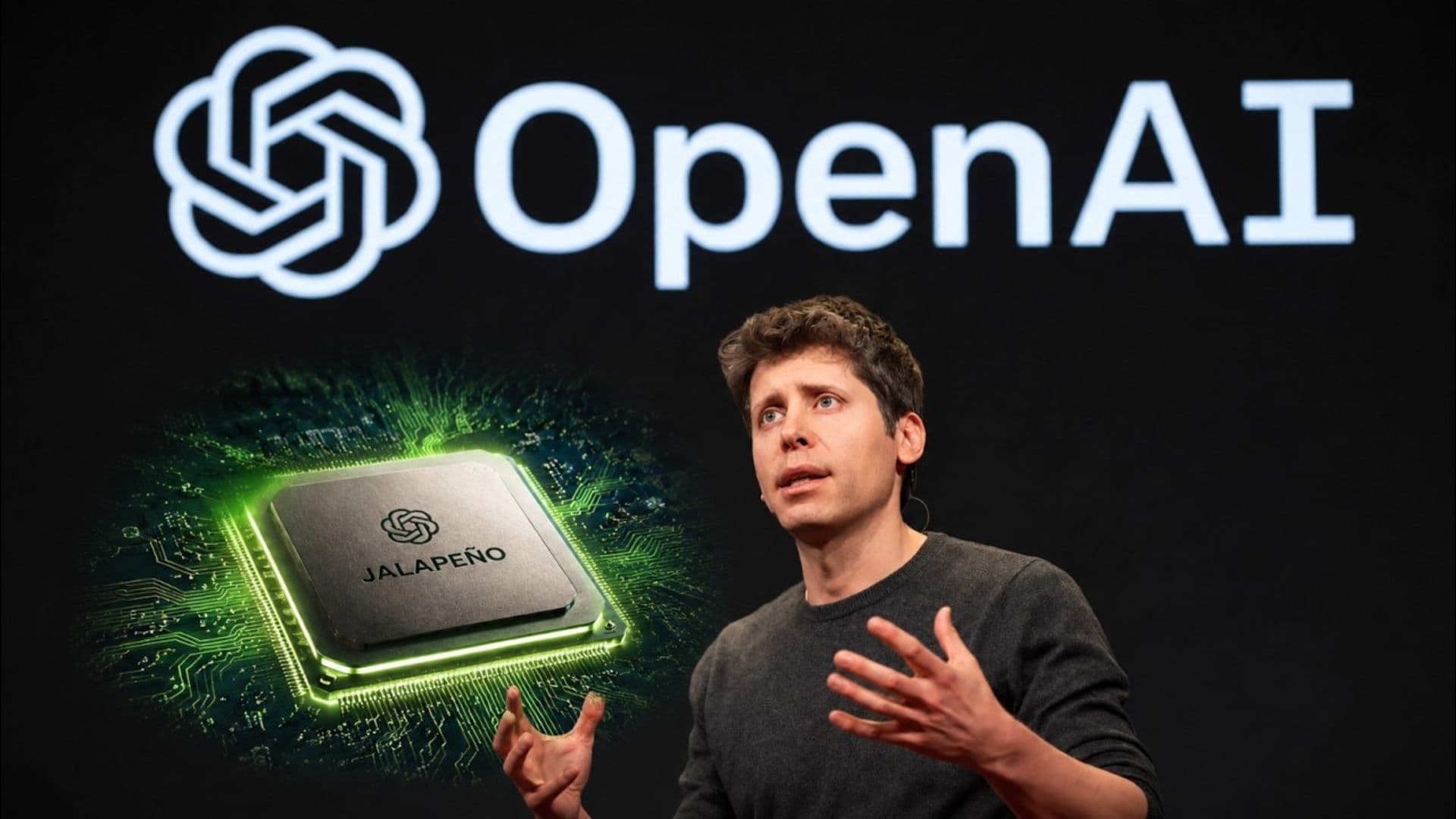
Developed with Broadcom, the inference-focused silicon marks ChatGPT’s maker’s first step toward owning its full technology stack from software down to hardware
The release of “Jalapeño” marks OpenAI’s first purpose built chip, signifying a notable strategic shift as it seeks to lessen its reliance on Nvidia through direct governance over its computing infrastructure. Developed in cooperation with semiconductor leader Broadcom, this hardware project is also OpenAI’s most critical from a historical perspective since being created.
What Jalapeño Actually Does
Jalapeño is an Application-Specific Integrated Circuit, or ASIC, built specifically for inference workloads, the process of running trained AI models on new data to generate responses in real-world applications. Unlike training chips, which demand brute computational force, inference chips are engineered for efficiency and speed. For a company running one of the world’s most widely used AI products in ChatGPT, optimising inference performance at scale has direct implications for both cost and user experience.
Taking On Nvidia’s Dominance
OpenAI now finds itself among other companies who have been developing custom silicon to chip away at Nvidia’s dominance and control tools for their AI platforms. Other companies developing custom AI silicon include Google (TPUs), Amazon (Trainium and Inferentia), and Groq (inference architecture). OpenAI’s Jalapeño represents a step toward achieving its objectives of lowering costs, improving performance, and minimizing operational risk of reliance on a single supplier.
Owning the Full Stack
In addition to the chip itself, this initiative illustrates OpenAI’s larger ambition for vertical integration with regards to its AI infrastructure; owning all aspects of the AI model (software and hardware) allows them to have total control over their AI ecosystem. This strategy is similar to those adopted by Apple, Google and Amazon whom have all benefited as a result of vertical integration with respect to their hardware and software platforms.
With Jalapeño, OpenAI is no longer positioning itself purely as an AI software company. It is staking a claim as a full-stack technology platform, one capable of competing on every front in an increasingly hardware-defined AI race.