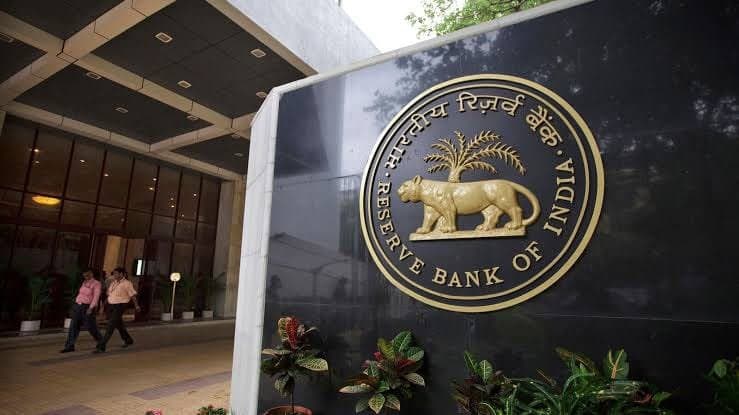
A November advisory puts the spotlight on compromised fintech systems, fraudulent loan disbursements and the responsibility banks retain for their technology partners.
A fraudster does not necessarily need to break into a bank’s core systems to move money out of its accounts. A compromised fintech platform, stolen API credentials or manipulated loan-disbursement instruction can provide another route into the banking system.
That risk is receiving renewed attention from the Reserve Bank of India (RBI). In an advisory issued on 16 November 2026, the central bank asked banks, small finance banks (SFBs) and non-banking financial companies (NBFCs) to strengthen controls around application programming interfaces (APIs), according to Business Standard’s reporting on 18 November, which cited senior bankers familiar with the regulator’s communications.
The concern is not limited to attacks on banks themselves. Financial institutions increasingly depend on fintech companies, payment service providers, lending platforms and technology vendors to process transactions and exchange customer information. A weakness in one connected system can expose several institutions.
The RBI’s latest intervention brings that shared exposure into sharper focus. Banks may rely on external technology providers to deliver digital services, but they remain responsible for ensuring that transactions passing through those connections are legitimate.
How a Third-Party System Can Become an Entry Point
APIs allow different software systems to communicate and exchange information. In banking, they support services ranging from payment processing and customer onboarding to loan applications and disbursements.
The commercial value is clear. Banks can integrate external platforms without building every service internally, while fintech companies can offer products using banking infrastructure.
The security problem emerges when an attacker compromises one of the systems authorised to communicate with a bank.
The RBI’s November advisory, as described by Business Standard, follows incidents in which attackers exploited weaknesses in connected financial systems and manipulated beneficiary account details in loan-disbursement processes. Funds intended for legitimate borrowers were redirected to accounts controlled by fraudsters.
This is a supply-chain attack: rather than targeting the bank’s primary infrastructure directly, criminals exploit a weakness in a connected service provider or partner.
The threat is not hypothetical. In an advisory issued on 9 October 2026, the Indian Computer Emergency Response Team (CERT-In) described attacks against NBFCs, digital lending platforms, fintech companies, payment service providers and wallet operators. It reported that attackers had compromised exposed applications and APIs, stolen payment gateway and partner-bank credentials, and then invoked disbursement or fund-transfer APIs from within the organisations’ own whitelisted infrastructure.
The advisory also described how fraudulent instructions could bypass controls relating to loan creation, KYC, sanction, beneficiary verification and transaction limits.
The technical details matter. An attacker using a legitimate credential or an approved network route may not trigger the same alerts as an unauthorised external connection. Security systems that verify only the identity of the connecting application can therefore miss fraudulent instructions originating from a compromised partner.
Read CERT-In’s Advisory CIAD-2026-0046.
Authentication Alone Is No Longer Enough

Traditional API security relies on controls such as authentication credentials, network restrictions and encryption. These remain necessary, but they cannot establish that every instruction sent through an authorised connection is genuine.
A compromised application may possess valid credentials. A stolen API key may allow an attacker to operate through infrastructure that the bank already trusts. The request can appear legitimate even when the transaction is fraudulent.
The safeguards being emphasised in the RBI’s recent communications include transaction-velocity checks, limits on API request frequency, IP whitelisting, encryption, beneficiary pre-validation, more frequent reconciliation and periodic rotation of API authentication keys. These measures were reported by Business Standard based on conversations with senior bankers.
CERT-In’s October advisory provides a more detailed technical response to the same class of attacks. It recommends maker-checker or second-level verification for fund movements, validation of payouts against approved records, per-transaction and daily limits, beneficiary name-to-account matching, secure credential storage and real-time monitoring for unusual transfers.
These controls address different points in the transaction process.
Rate limits can restrict the number of requests an API processes within a given period. Beneficiary validation can identify changes to account details before funds are released. Maker-checker controls introduce a second approval stage for sensitive payments. Reconciliation can expose differences between authorised instructions and actual bank transactions.
No single measure is sufficient. The objective is to ensure that a compromised credential or partner application cannot independently initiate an unrestricted movement of funds.
Banks Remain Accountable for Their Technology Partners
The RBI’s focus on third-party exposure is also reflected in its formal cybersecurity framework.
The Reserve Bank of India (Commercial Banks – Cybersecurity, Technology: Risk, Resilience and Assurance Framework) Directions, 2026, issued on 31 July and updated on 1 October, require banks to assess vendor risks in proportion to their importance and exposure.
The directions specifically address concentration risk, single points of failure, customer-data protection, service availability and supply-chain security. They also make banks accountable for managing security risks in outsourced and partner arrangements.
The framework requires regular due diligence and oversight of vendors and service providers. Agreements must provide for audit rights, including the RBI’s right to inspect relevant resources. Banks must also assess the credentials of third-party personnel who can access or manage critical assets.
The position is clear: outsourcing a technology function does not transfer the bank’s regulatory responsibility for the associated security risks.
NBFCs are covered by a separate RBI framework. The Reserve Bank of India (Non-Banking Financial Companies – Cybersecurity, Technology: Risk, Resilience and Assurance Framework) Directions, 2026 also require vendor-risk assessments, supply-chain controls and appropriate management of third-party security exposure. The specific requirements differ according to an NBFC’s regulatory layer and asset size.
This distinction matters. The RBI does not apply every provision of its commercial-bank framework identically to SFBs and NBFCs. The applicable regulatory directions depend on the type of institution and its classification.
For fintech companies and technology vendors, the implications extend beyond their immediate contracts with lenders. Their security arrangements, access controls, incident reporting and ability to demonstrate compliance are increasingly relevant to whether financial institutions will continue to work with them.
Six-Hour Reporting Is an Existing Requirement
Incident reporting is another part of the regulatory framework, but it should not be confused with a new requirement created by the 16 November advisory.
The RBI’s July 2026 cybersecurity directions already require covered commercial banks to report cyber incidents within six hours of detection through its DAKSH supervisory platform and to proactively notify CERT-In.
The separate NBFC cybersecurity directions also prescribe reporting to the RBI within six hours of detection. These obligations are set out in the respective commercial-bank directions and NBFC directions.
The practical challenge is ensuring that incidents are detected and escalated quickly enough for the reporting window to be met. If an external service provider discovers a breach but delays notifying the bank, the institution may lose valuable time in containing the exposure.
A functioning response process therefore needs more than a regulatory reporting contact. It requires clear escalation responsibilities, access to relevant system logs, forensic capabilities, coordination with vendors and procedures to suspend compromised credentials or APIs.
The RBI’s broader framework also requires institutions to maintain incident-response and recovery arrangements, investigate root causes and test their ability to restore critical services.
The Cost of Securing an Interconnected Banking System
Stronger API controls come with implementation costs.
Banks and NBFCs may need to upgrade monitoring systems, strengthen identity and access management, review vendor contracts, conduct more frequent security assessments and invest in specialised cybersecurity personnel.
Smaller fintech companies and technology vendors could face particular pressure. They may have fewer resources to maintain independent security teams, conduct regular penetration tests or meet the audit and reporting expectations of multiple financial institutions.
There is also an operational trade-off. More verification can reduce fraud exposure, but poorly designed controls may delay legitimate transactions, create false alerts and increase processing costs.
Financial institutions will need to apply controls according to the sensitivity and risk of each API connection. A read-only customer-information interface does not carry the same exposure as an API capable of initiating loan disbursements or transferring funds.
The commercial relationship between banks and fintech partners may consequently change. Security assessments, access restrictions, incident notifications and audit rights are likely to become more important in vendor selection and contract negotiations.
For technology providers, security will increasingly be part of the cost of doing business with regulated financial institutions.
The Move Towards Zero-Trust Banking
The wider security principle behind these measures is often described as Zero Trust. Instead of assuming that a request is safe because it comes from an authorised network or a recognised partner, the institution verifies access and activity continuously.
In banking, that means checking more than credentials. Institutions must establish whether the transaction is consistent with an approved business process, whether the beneficiary details are valid, whether the request falls within permitted limits and whether its pattern resembles legitimate activity.
The RBI’s November API-security push does not amount to a formal declaration that all regulated entities must adopt a specific Zero-Trust architecture. It does, however, reinforce the underlying principle: trusted connections should not receive unrestricted authority.
India’s digital banking infrastructure has expanded through partnerships between banks, fintech companies, payment platforms and technology providers. Those connections have made financial services faster and more accessible. They have also created a wider attack surface that no individual institution can secure in isolation.
The regulatory challenge now is to make security standards across that network as dependable as the banking infrastructure at its centre.
For banks, that means treating third-party security as part of their own risk management. For fintech companies, it means recognising that access to financial infrastructure carries responsibilities beyond delivering a working product.
The next serious banking breach may not begin inside a bank. The ability to detect and contain it will depend on how well every connected institution manages its part of the system.
Also Read:The Leverage Illusion: Why the One-Person Startup Hits a Scale Ceiling