TriNANO Technologies has built a nano-layer thinner than a human hair that boosts panel output by 4% and cuts water consumption by 55% — making the case that optimising what exists beats building what’s new
When it comes to solar fields in India, one of the major challenges that continues to get little consideration is that solar panels create 20–22% efficiency in controlled environments, but only 15–18% once they meet the elements like the weather, dust on the panels and extreme heat.
Operators are spending weeks using tens of thousands of litres of water for each megawatt produced just to keep the panels clean (which creates an unsustainable practice in a water-scarce state such as Rajasthan).
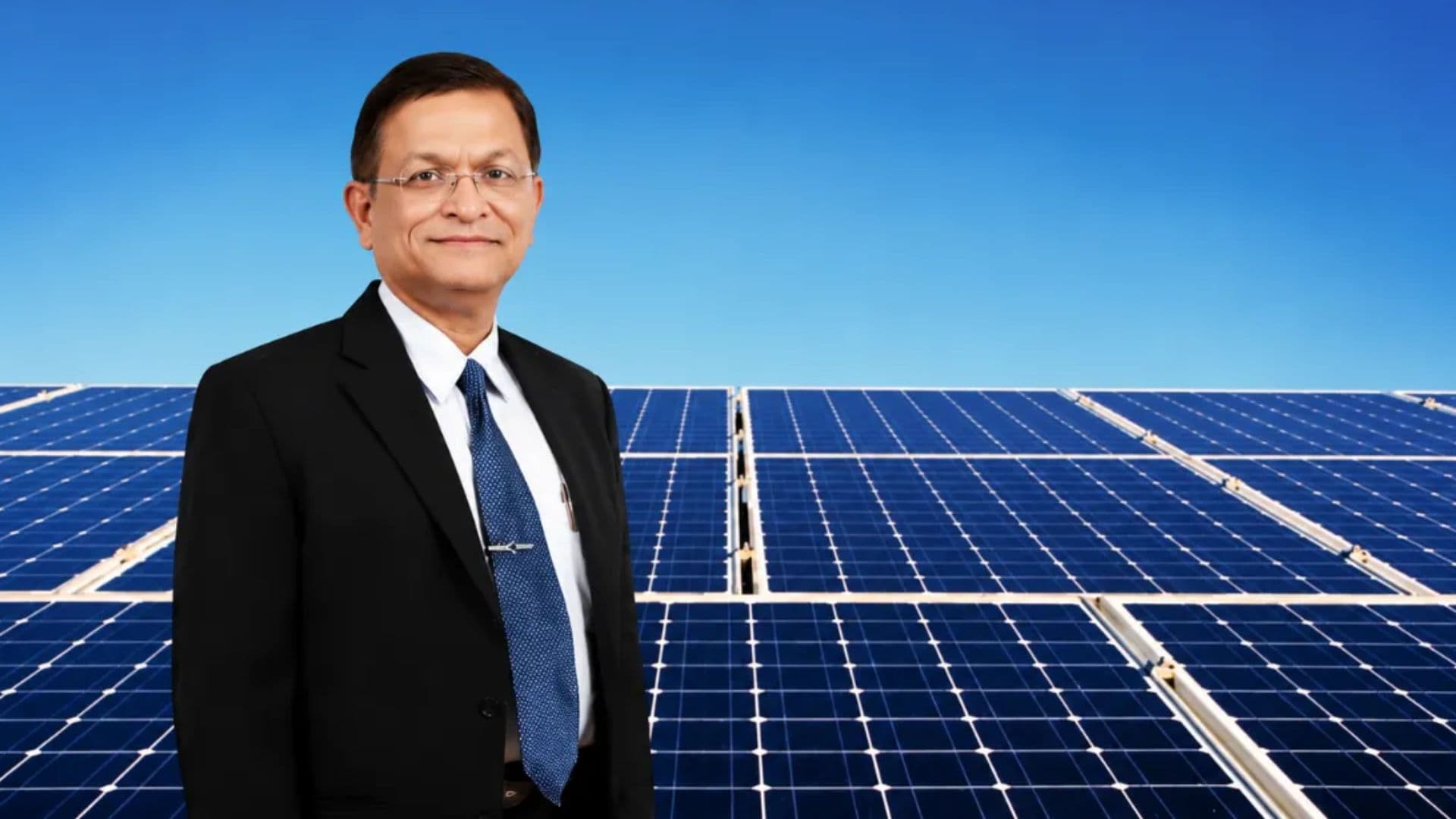
For Dr. Harsh Sethi – the materials engineer and founder of TriNANO Technologies in Mumbai – the event that caused him to turn his focus on dirt and its effect on solar energy production was a solar farm manager telling him: “We lose more energy to dirt than to clouds”. The thought stayed with him for some time.
What his team built in response is almost impossibly thin. At 0.4 microns, a fraction of a human hair’s width. TriNANO’s nano-coating bonds directly to panel glass at the molecular level. It traps light, deflects heat, cools surfaces by 2–3°C, and renders panels effectively self-cleaning. Crucially, it works on panels of any brand or age, without requiring replacement or major intervention.
The field results are hard to argue with. Across multiple installations, the coating consistently delivers a 4% increase in energy output. A retrofit on eleven-year-old panels in Neemuch, Madhya Pradesh produced a 3.8% power gain, 56% fewer cleaning cycles, and a 55% reduction in water use — over one million litres saved annually per megawatt.
At Rs 750 per panel, payback typically arrives within two years. Incubated at IIT Bombay and backed by Spectrum Impact and Austria’s Elektron Invest, TriNANO is scaling from 7MW to 330MW annual capacity by FY 2026–27. Sometimes the most powerful energy innovation isn’t a new panel — it’s making existing ones finally work as promised.