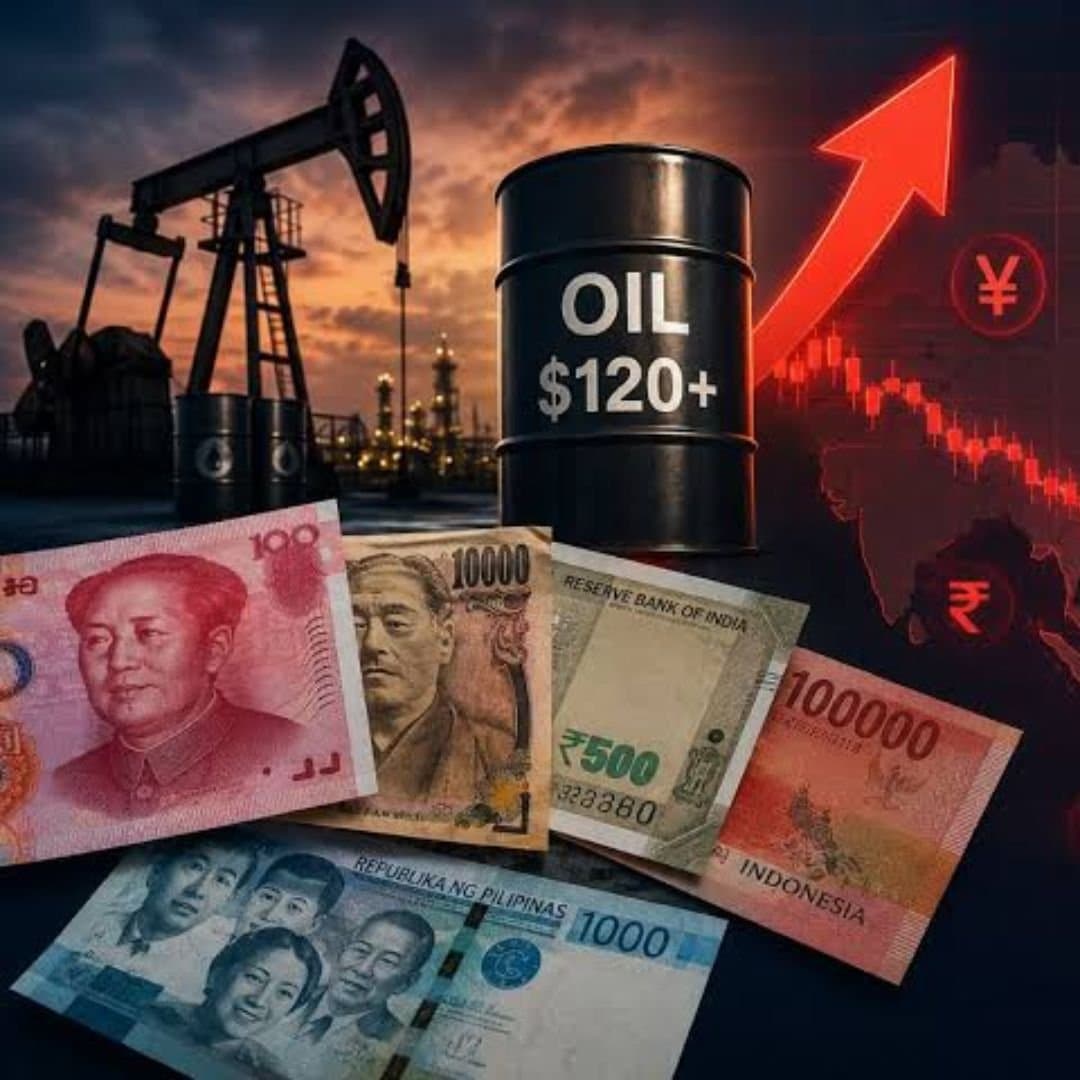
Brent crude oil prices surged above $110 per barrel during Wednesday’s trading session amid concerns over disruptions to Middle Eastern oil supplies and attacks on shipping routes. The rally has renewed concerns about India’s import bill, inflation outlook, rupee stability and corporate earnings, given the country’s heavy dependence on imported crude.
The rise in oil prices comes at a difficult time for Indian financial markets, with foreign investors selling equities and businesses facing uncertainty over input costs. While crude prices later fluctuated below their session highs, supply risks around the Strait of Hormuz continued to influence market sentiment.
For India, the central question is not simply whether crude crosses $110, but how long prices remain elevated and whether the increase is passed on to consumers, absorbed by oil companies or offset through government policy.
Why rising crude oil matters so much for India

1. India’s import bill could rise sharply
India imported approximately 88.7% of its crude oil requirements in FY2025-26, according to data sourced to the Petroleum Planning and Analysis Cell (PPAC). That dependence makes the economy vulnerable to prolonged price increases in international markets.
A higher oil price means Indian refiners and importers must spend more dollars to secure the same volume of crude. If those additional costs are not offset by lower prices elsewhere, they can widen the merchandise trade deficit and put pressure on the current account.
The final impact will depend on the average price paid for imported crude, the rupee-dollar exchange rate, import volumes and the availability of alternative suppliers.
2. Will petrol and diesel prices rise in India?

Not necessarily immediately. International crude prices are only one component of retail fuel prices in India. Refining costs, taxes, marketing margins and government or oil-marketing-company pricing decisions also matter.
If crude remains expensive for an extended period, oil-marketing companies may face a difficult choice: absorb higher costs and risk weaker margins, or pass some of the increase on to consumers where pricing conditions permit.
Higher retail fuel prices would affect households directly and could increase transport and logistics costs for businesses. However, a rise in Brent crude alone does not establish that petrol or diesel prices will increase at Indian pumps.
3. Inflation could rise as businesses pass on costs
Oil affects more than transport. It also influences aviation fuel, freight, petrochemicals, packaging, synthetic materials and several industrial inputs.
If energy costs remain elevated, businesses may pass some of the increase on to consumers through higher prices. This could complicate the Reserve Bank of India’s efforts to balance inflation control with economic growth.

The actual inflation impact would depend on how long crude remains expensive, the extent of domestic fuel-price adjustments and whether companies absorb some of the increase through lower margins.
4. The rupee could face renewed pressure
Higher oil prices tend to increase India’s demand for dollars to pay for imports. All else being equal, this can put downward pressure on the rupee.
The currency nevertheless has other sources of support, including capital inflows and RBI measures. On October 21, Reuters reported that the rupee had strengthened to around ₹94.46 per dollar, supported by inflows linked to the Jio Platforms IPO, even as elevated crude prices limited the positive outlook.
A weaker rupee, if it occurs, would make dollar-priced imports more expensive in local currency and could add to imported inflation.
5. Which sectors could be affected?
| Sector | Potential impact of sustained high oil prices |
|---|---|
| Aviation | Higher jet-fuel costs could squeeze margins. |
| Paints and chemicals | More expensive petroleum-derived inputs could raise production costs. |
| Logistics and transport | Higher diesel and freight costs could affect profitability. |
| Oil-marketing companies | Marketing margins could come under pressure if retail prices do not adjust with costs. |
| Oil producers | Higher realised prices may support revenue, depending on production and policy factors. |
| FMCG and consumer businesses | Packaging, distribution and other input costs could rise. |
| Renewable energy | Higher fossil-fuel costs may improve the relative economics of some alternatives, though project economics vary. |
These are potential effects, not guaranteed share-price movements. Company-specific contracts, hedging, pricing power and government policies can materially change the outcome.
ALSO READ: With large-scale smart oilfield deployment, Oil India accelerates digital transformation
What is driving the global oil rally?
The price movement reflects a combination of geopolitical risk and changing supply expectations. Reuters reported on October 21 that Brent crude had traded near five-month highs, with concerns over continued attacks on vessels in and around the Strait of Hormuz adding to supply worries. At the same time, possible progress in Russia-Ukraine talks and changes in US oil inventories were influencing prices in the opposite direction.

The Strait of Hormuz is an important route for global energy shipments. Any sustained disruption could increase shipping costs, delay deliveries and push up the risk premium in oil prices. Conversely, an easing of tensions or improved supply availability could bring prices down.
Three scenarios for India
Scenario 1: Crude stays above $110 for several weeks
India could face a higher import bill, pressure on corporate margins and greater inflation risks. The rupee and equity markets could remain sensitive to incoming oil-price news.
Scenario 2: Crude retreats towards $90–$100
Import-cost pressure could ease, offering some relief to the rupee, energy-intensive industries and investor sentiment. The extent of the benefit would depend on the speed and durability of the decline.
Scenario 3: Shipping disruptions intensify
A further supply shock could push oil prices higher and increase uncertainty over fuel pricing, inflation and monetary policy. The impact would depend on the duration and scale of the disruption.
These are illustrative scenarios, not forecasts or price targets.
What should consumers and investors watch?
The most important indicators over the coming days are:
- Brent and WTI crude prices, including whether prices stay elevated beyond short-lived spikes.
- Official Indian retail fuel-price announcements and statements from oil-marketing companies.
- The rupee’s movement against the US dollar.
- India’s monthly trade and inflation data.
- Developments around the Strait of Hormuz and other key shipping routes.
- RBI commentary on imported inflation and the monetary-policy outlook.
Conclusion
Crude oil above $110 per barrel is a warning sign for India because of the country’s dependence on imported energy. A prolonged rally could increase the import bill, complicate inflation management, affect the rupee and squeeze profit margins in energy-intensive sectors.
But the consequences are not automatic. The duration of the price surge, domestic fuel-pricing decisions, currency movements and developments in the Middle East will determine how much of the global oil shock reaches Indian households and businesses.
For now, the key variable is how long oil stays expensive, rather than the breach of a particular price level alone.