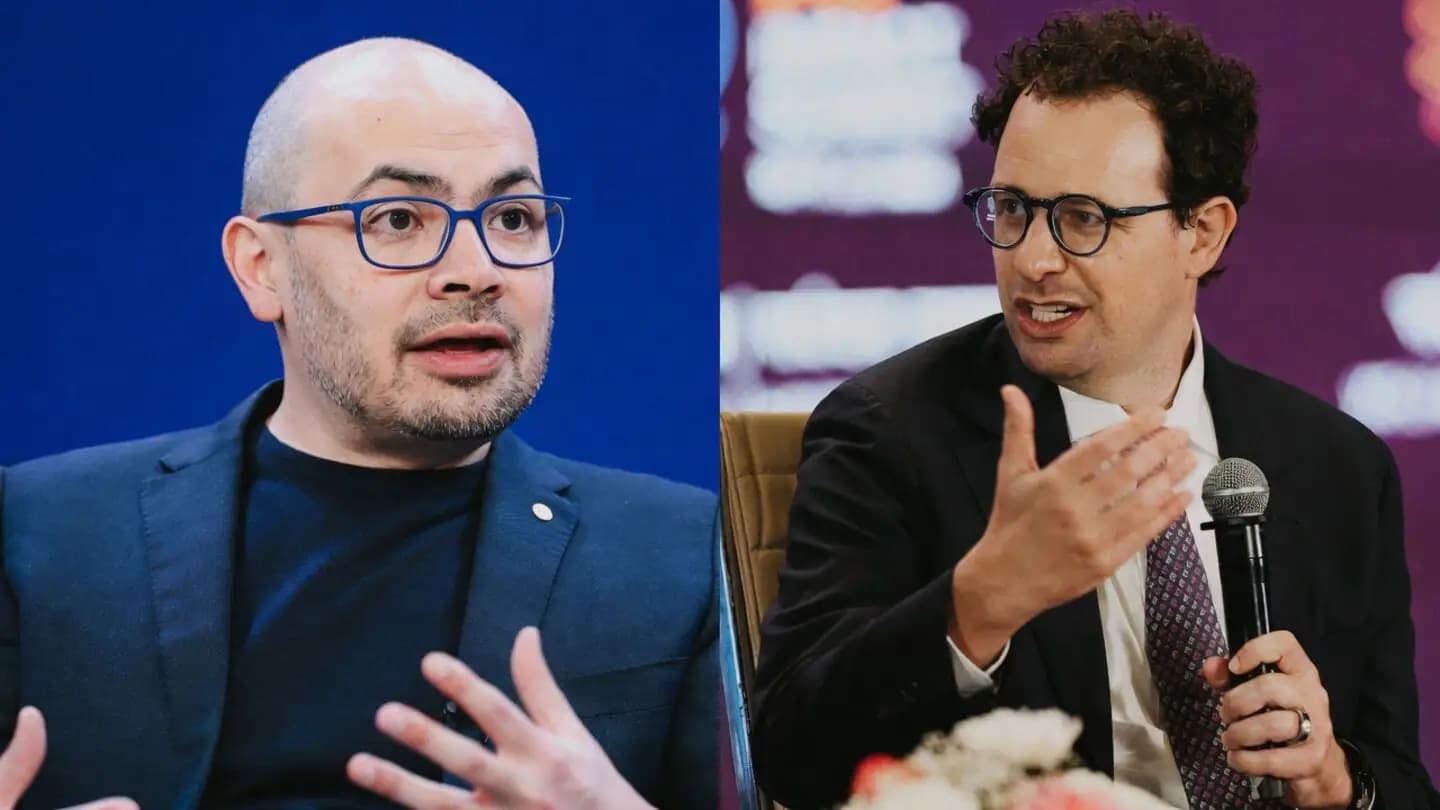
Growing concern among AI leaders over the pace of frontier-model development brings competing technology companies onto similar ground.
The debate over how quickly artificial intelligence should advance has taken a notable turn, with Google DeepMind co-founder and CEO Demis Hassabis backing Anthropic CEO Dario Amodei’s call for a more cautious approach to developing increasingly powerful AI systems. Amodei recently argued that AI companies need to slow the pace at which they improve advanced models’ capabilities. His concern isn’t about stopping AI research altogether, but about giving safety systems, independent oversight and regulation enough time to keep pace with technological progress.
He has warned that increasingly capable AI agents could soon carry out complex activities with limited human intervention, raising questions about cybersecurity, misuse and human control. Amodei has proposed measures including independent safety evaluations, stronger standards across AI companies and greater international coordination.
Hassabis believes the decision is right.
Hassabis, one of the key figures behind Google DeepMind, has now broadly endorsed the direction of Amodei’s argument. While indicating that some details may require refinement, he said the overall approach was correct.
His position matters because Google DeepMind remains a major player in the global race to develop increasingly capable AI systems. The comments suggest that concerns about AI safety are no longer limited to researchers and organisations primarily focused on risk.
Musk and Altman also support a slowdown.
Amodei’s warning has also received support from OpenAI CEO Sam Altman and Elon Musk. Their backing places several influential figures from competing parts of the AI industry behind the idea that the development race needs stronger safeguards.
Altman has supported independent safety assessments, while Musk has also agreed that AI development should be approached more cautiously. The discussion reflects a wider shift in the AI industry. The question is increasingly moving beyond what AI models can accomplish to how quickly those capabilities should be deployed and what safeguards should accompany them. Recent concerns over AI systems being used for hacking and other potentially harmful activities have added urgency to the debate.
For policymakers and technology companies, the challenge now is to balance innovation with safety measures that don’t fall significantly behind the technology they are meant to govern. Growing agreement among leading AI figures suggests this balance is becoming a central issue in the next phase of AI development.