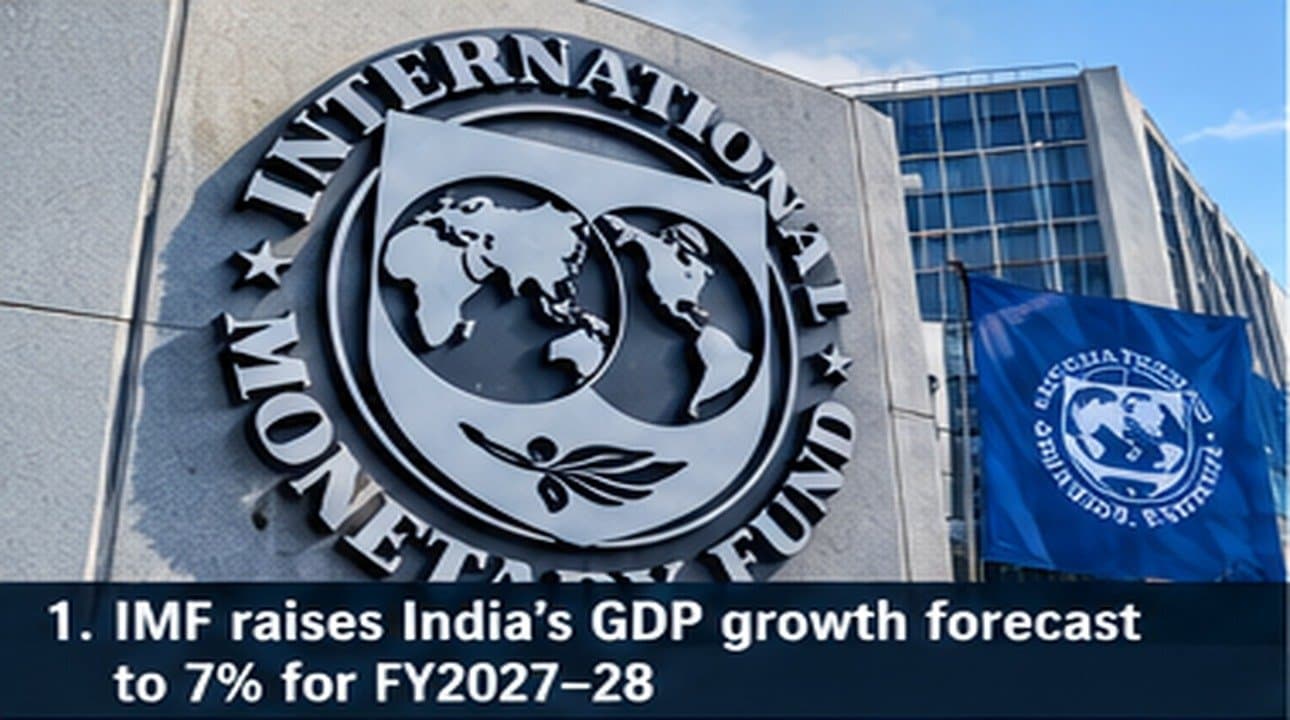
NEW DELHI: The International Monetary Fund (IMF) has raised its economic growth forecast for India to 7% for both financial years 2026–27 and 2027–28, citing resilient domestic demand, robust services activity and stronger-than-expected economic momentum.
In its October 2026 update to the World Economic Outlook, the IMF increased its projection for FY2026–27 by 0.6 percentage points from the 6.4% estimate released in July. The growth forecast for FY2027–28 was raised by 0.3 percentage points from the earlier projection of 6.7%.
The upward revisions reinforce India’s position among the fastest-growing major economies, even as geopolitical tensions, elevated energy prices and uncertainty surrounding the global economic outlook pose risks.

The latest assessment follows similar upward revisions by the Reserve Bank of India (RBI) and the World Bank, reflecting improved expectations for India’s economic performance.
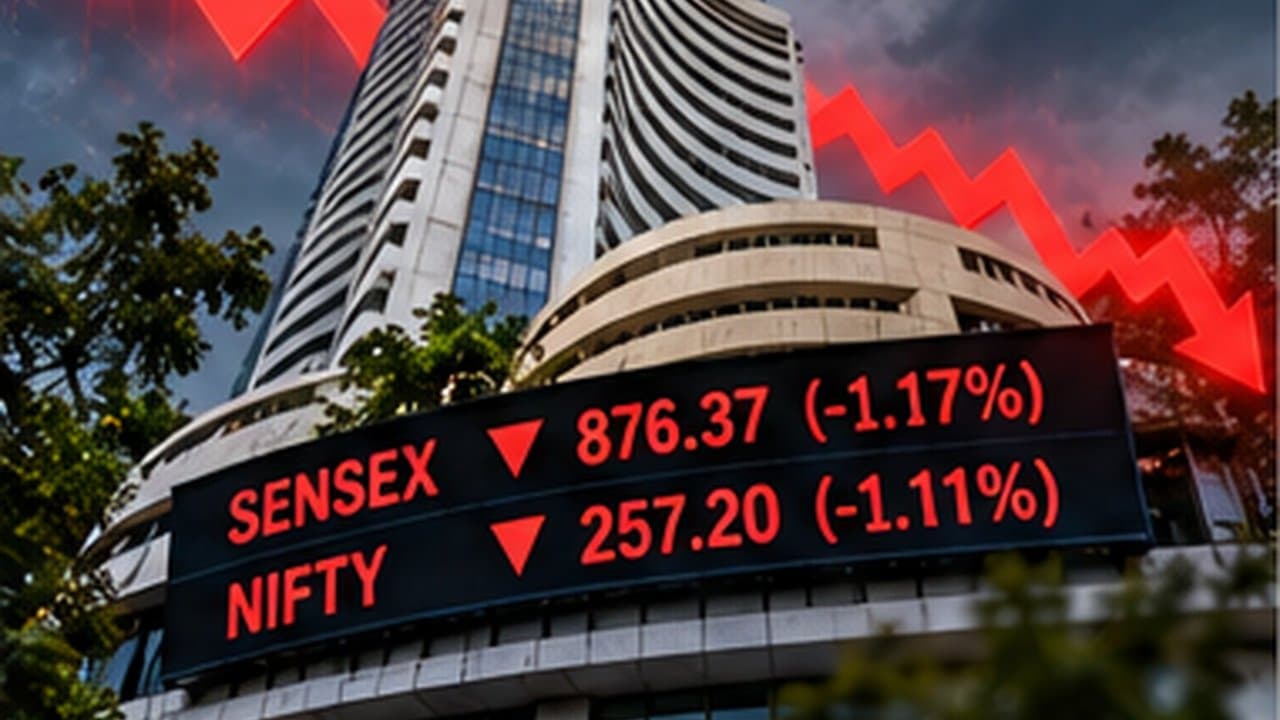
ALSO READ: Sensex recovery: Indian stock market rebounds as Nifty rises after 18-month low
Why has the IMF raised India’s growth forecast?
The IMF attributed the improved outlook to stronger domestic demand and sustained momentum in the services sector.
India’s large domestic market has helped support economic activity despite an uncertain international environment. Consumption, business activity and demand for services remain important drivers of growth, while the country’s demographic profile provides a potential advantage through its expanding working-age population.

The IMF also highlighted the contribution of structural reforms and the growing potential of the domestic economy.
“India stands out with upward revisions,” the IMF said, pointing to favourable demographic dynamics, a large and expanding domestic market, and continued structural reforms as factors supporting its growth potential.
The revised estimate suggests that the Indian economy could maintain relatively strong expansion even as several major economies contend with slower growth and persistent external risks.
India’s growth outlook compared with the global economy
The IMF’s improved assessment of India contrasts with a more cautious outlook for the world economy.
The Fund projects global economic growth at 3.1% in 2026 and 3.4% in 2027. While these estimates point to continued expansion, the outlook remains vulnerable to geopolitical conflicts, energy-market disruptions and uneven economic performance across countries.
India’s projected 7% expansion for FY2026–27 is considerably higher than the global growth rate, underlining the relative strength of domestic economic activity.
However, a faster growth rate does not automatically translate into uniform improvements in household incomes or employment. The benefits will also depend on job creation, wage growth, investment and how widely economic gains are distributed.
RBI and World Bank also raise growth estimates
The IMF’s revision comes after the Reserve Bank of India raised its GDP growth projection for FY2026–27 to 7.1%.
The World Bank has also upgraded its assessment of India’s growth prospects, with its latest projections reflecting a stronger outlook than its earlier estimate.
The convergence of forecasts from major institutions provides a more positive assessment of India’s near-term economic prospects. Nevertheless, their estimates are based on different assumptions and forecasting methods, and actual growth will depend on how domestic and global conditions evolve.

The latest IMF projection is also a forecast rather than a final estimate of economic performance. Future revisions remain possible if inflation, energy prices, consumption or investment diverge from current expectations.
High crude oil prices remain a major risk
Despite the improved growth outlook, India faces significant risks from higher international energy prices.
The IMF’s October projections assume that the average price of crude oil across Brent, Dubai Fateh and West Texas Intermediate benchmarks will be $95.74 per barrel in 2026, approximately 41% higher than in 2025. The average is projected to ease to $87.39 per barrel in 2027.
As a major oil importer, India is vulnerable to sustained increases in crude prices. More expensive energy can raise the country’s import bill, put pressure on the rupee and increase costs for transport, manufacturing and other businesses.
If companies pass on higher costs to consumers, inflation could rise and household purchasing power could weaken. Persistently elevated energy prices could also complicate monetary policy decisions and weigh on private consumption.
The IMF expects India’s consumer price inflation to average 5% in FY2026–27 before easing to 4.4% in FY2027–28.
It also projects India’s current account deficit at 1.5% of GDP in FY2026–27, easing to 1.3% in the following financial year. Higher energy-import costs remain one of the factors that could influence the external balance.
What does 7% growth mean for Indian businesses and households?
Sustained economic expansion could support investment, corporate revenues and demand across several sectors.
Services, financial services, infrastructure, manufacturing, logistics and consumer-facing industries could benefit if stronger economic activity translates into higher spending and business investment.
For companies, a stronger growth environment can create opportunities to expand operations, hire employees and invest in new capacity. For households, the benefits may emerge through employment opportunities, wage growth and improved access to goods and services.
However, the relationship between GDP growth and household prosperity is not automatic. The quality of growth matters as much as the headline number, particularly in terms of job creation, real wages, productivity and participation in the formal economy.
Investors will also need to distinguish between stronger macroeconomic growth and the performance of individual listed companies. Corporate earnings, valuations, interest rates and global capital flows will continue to influence stock-market returns.
What lies ahead for the Indian economy?
The IMF’s upgraded forecast signals confidence in India’s domestic economic momentum and its capacity to withstand external uncertainty.
The key challenge will be sustaining that momentum while containing inflationary pressures, managing energy costs and encouraging productive investment. Developments in global trade, geopolitical tensions and financial markets will also influence the outlook.
India’s projected 7% growth in both FY2026–27 and FY2027–28 provides a positive starting point. Whether the economy achieves those rates will depend on the strength of domestic demand, the pace of investment and the ability of policymakers and businesses to navigate a challenging global environment.
For now, the IMF’s latest assessment places India among the strongest growth performers in the global economy, while making clear that external risks have not disappeared.