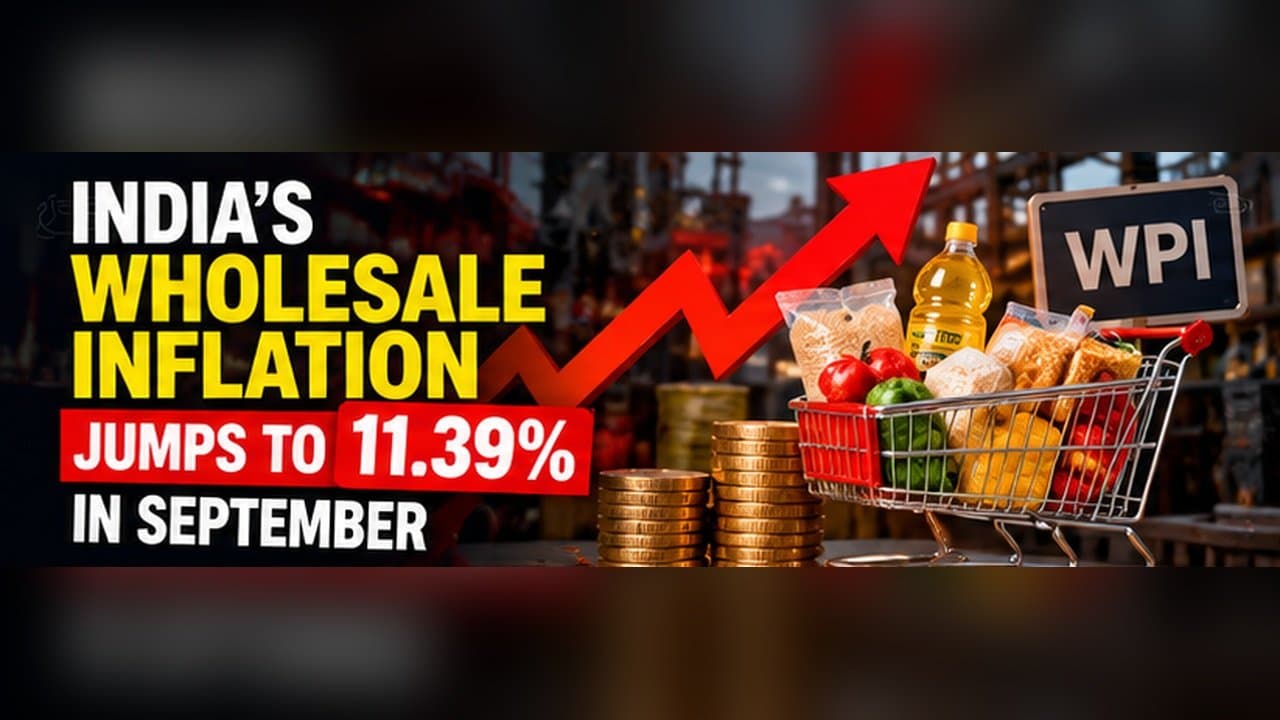
India’s retail inflation rose to 5.54% in September 2026, up from 4.83% in August, as elevated food prices put renewed pressure on household budgets and complicated the outlook for monetary policy.
According to provisional data released by the Ministry of Statistics and Programme Implementation (MoSPI) on October 12, inflation measured by the Consumer Price Index (CPI) rose to its highest level under the current CPI series, which uses 2024 as its base year. Food inflation climbed to 7.74% in September from 5.97% in August.

The latest reading puts retail inflation closer to the Reserve Bank of India’s upper tolerance limit of 6%, while remaining above its medium-term target of 4%. The increase also marks the fourth consecutive month in which inflation has remained above the RBI’s target, according to Reuters.
Onion prices more than double
The sharpest pressure has come from essential food items. Onion prices rose 108.09% year-on-year in September, compared with 48.78% in August. Garlic inflation accelerated to 54.62%, while ginger prices increased 62.85% and lemon prices rose 36.41%, according to the published CPI item-level figures.
These increases matter because food accounts for a substantial share of household spending, particularly among lower-income families. Sustained price rises can force consumers to cut discretionary purchases, affecting demand for goods and services beyond the grocery basket.

The pressure is also uneven across the country. Rural retail inflation stood at 6.08% in September, compared with 4.88% in urban areas. Rural food inflation reached 8.06%, against 7.18% in urban India.
The gap suggests that households in rural areas are facing a particularly sharp squeeze, although the actual impact on individual families will depend on their income, consumption patterns and access to locally produced food.
What does this mean for the RBI?
The data arrives after the RBI raised its benchmark repo rate by 25 basis points to 5.50% earlier in October, its first rate increase in nearly four years, according to reporting by Reuters and Fortune India.
Higher inflation can increase the likelihood of further monetary tightening if price pressures persist. However, the RBI will also need to assess whether the increase is driven mainly by temporary supply disruptions or reflects broader, more persistent price pressures.

A further rate increase could raise borrowing costs for businesses and households, while potentially helping contain demand-driven inflation. For borrowers with loans linked to external benchmarks, the impact would depend on their lender’s rate-reset schedule and loan terms.
Economists cited by Reuters have flagged the possibility of further rate increases in the coming months, but future decisions will depend on incoming data, economic growth and the persistence of food and energy price pressures.
The crude oil and monsoon risks
Food prices are not the only concern. Higher international crude oil prices can increase India’s import bill and put pressure on transport, logistics and production costs. Weather-related supply disruptions can also affect the availability and prices of agricultural commodities.
The interaction of food inflation, energy costs and currency movements will therefore be important in determining whether inflation moderates or remains elevated over the coming months.
For consumers, the immediate concern is the cost of everyday essentials. For policymakers, the challenge is to contain inflation without unnecessarily weakening economic activity.
ALSO READ: Sensex crash: Why Indian stock market lost over ₹10 lakh crore as Nifty hits 18-month low
What happens next?
The next key indicators will include food-price movements, the October CPI release, developments in crude oil prices and the RBI’s assessment of inflation expectations.
The September figures do not, by themselves, establish that inflation will continue rising. But they underline the risk that persistent food-price pressures could delay a sustained return towards the RBI’s 4% target.