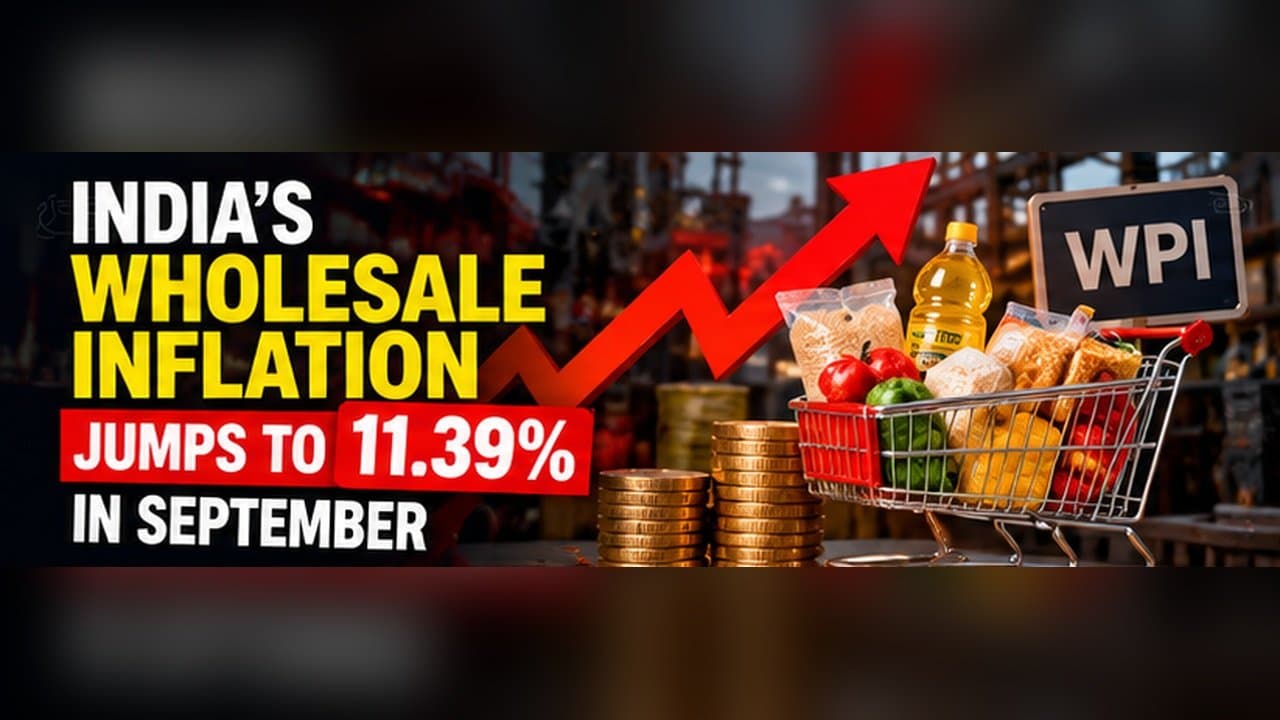
NEW DELHI: India’s wholesale price inflation accelerated to 11.39 per cent in September 2026, up from 9.92 per cent in August, as fuel and power, food commodities and manufactured products recorded higher price increases, according to provisional government data released on Wednesday.
The Wholesale Price Index (WPI)-based inflation rate reflects changes in prices received by producers and suppliers before goods reach consumers.
The latest increase points to mounting cost pressures across several segments of the economy, with potential implications for manufacturers, businesses and the broader inflation outlook.
According to the Ministry of Commerce and Industry, inflation in fuel and power climbed to 25.85 per cent in September from 22.93 per cent in August. Inflation in manufactured products increased to 9.76 per cent from 8.37 per cent, while primary articles inflation rose to 8.67 per cent from 7.76 per cent.
The figures indicate that price pressures have broadened beyond a single commodity group, raising concerns about input costs and the possibility that businesses could pass some of the increases on to consumers.
Fuel and power emerge as major drivers

Fuel and power recorded the highest inflation rate among the three major WPI groups, at 25.85 per cent in September.
Rising prices of mineral oils, crude petroleum and natural gas, coal and other energy-related inputs contributed to the increase. Higher energy costs can affect transportation, logistics, electricity-intensive industries and manufacturing, increasing the cost of producing and distributing goods.
The increase is particularly relevant for India because the country depends heavily on imported crude oil. International oil-price volatility can raise the import bill and put pressure on the domestic currency, potentially increasing the cost of imported energy and other inputs.
According to the official release, inflation in mineral oils was 40.02 per cent in September, while inflation in crude petroleum and natural gas stood at 57.32 per cent.
Sustained energy-cost pressures could therefore remain an important risk for businesses and policymakers in the coming months.
Food inflation also accelerates

The government’s WPI Food Index recorded inflation of 8.66 per cent in September, compared with 7.05 per cent in August.
The index includes food articles in the primary commodities group as well as manufactured food products. Its increase points to higher wholesale prices across parts of the food supply chain.
Higher food costs can affect processors, restaurants, retailers and other businesses that depend on agricultural commodities. Depending on supply conditions, transport costs and the ability of businesses to absorb price increases, some of the additional costs may eventually reach households.
Manufacturing costs come under pressure

Inflation in manufactured products rose to 9.76 per cent in September from 8.37 per cent in August.
The government identified basic metals, chemicals and chemical products, textiles, rubber and plastic products, and electrical equipment among the categories contributing to wholesale price pressures.
Manufacturers may face a difficult choice when input costs rise: absorb the increases and accept lower profit margins, improve efficiency, negotiate with suppliers or raise selling prices.
The eventual impact will vary across industries. Companies with stronger pricing power may be better positioned to pass on higher costs, while smaller businesses operating on thin margins may face greater pressure.
If cost increases persist, they could influence corporate earnings, production decisions and investment plans.
Will higher wholesale inflation push up retail prices?
A rise in wholesale inflation does not automatically translate into an equivalent increase in retail inflation.
The Consumer Price Index (CPI), which measures prices paid by households, has a different composition and weighting system. The extent to which wholesale price increases feed into retail prices depends on demand, competition, supply conditions, taxes and the ability of businesses to absorb additional costs.
Nevertheless, prolonged increases in energy, food and manufactured-goods prices can create conditions for broader inflationary pressure.
Policymakers will therefore monitor whether higher input costs remain concentrated in wholesale markets or begin to affect consumer prices more significantly.
What does the data mean for the RBI?

The RBI’s monetary-policy decisions are primarily guided by the retail framework rather than the wholesale price index alone. The central bank also considers growth, liquidity, currency movements, international energy prices and the broader outlook for demand.
If wholesale cost pressures persist and begin feeding into consumer, they could complicate the RBI’s assessment of the balance between price stability and economic growth.
However, one month’s WPI reading is not sufficient on its own to establish the direction of future interest-rate decisions.
ALSO READ: IMF Raises India’s GDP Growth Forecast to 7% for FY2027–28; Economy Set to Outpace Global Peers
Outlook: Can inflationary pressure ease?
The trajectory of wholesale inflation will depend on international energy prices, food supplies, domestic production costs and the strength of demand.
A moderation in crude oil and other commodity prices could ease pressure on businesses. Conversely, sustained increases in energy and raw-material costs could keep wholesale inflation elevated and place pressure on corporate margins.
For now, September’s 11.39 per cent reading highlights the scale of price increases facing producers and suppliers. The next key indicators will be retail inflation, subsequent wholesale price data and developments in global commodity markets.