The Reserve Bank of India (RBI) is set to announce its latest monetary-policy decision on Wednesday, October 7, with markets closely watching whether the central bank will begin a new cycle of interest-rate hikes.
The RBI’s six-member Monetary Policy Committee (MPC) has been meeting from October 5 to October 7 to assess inflation, economic growth, liquidity conditions and global developments.
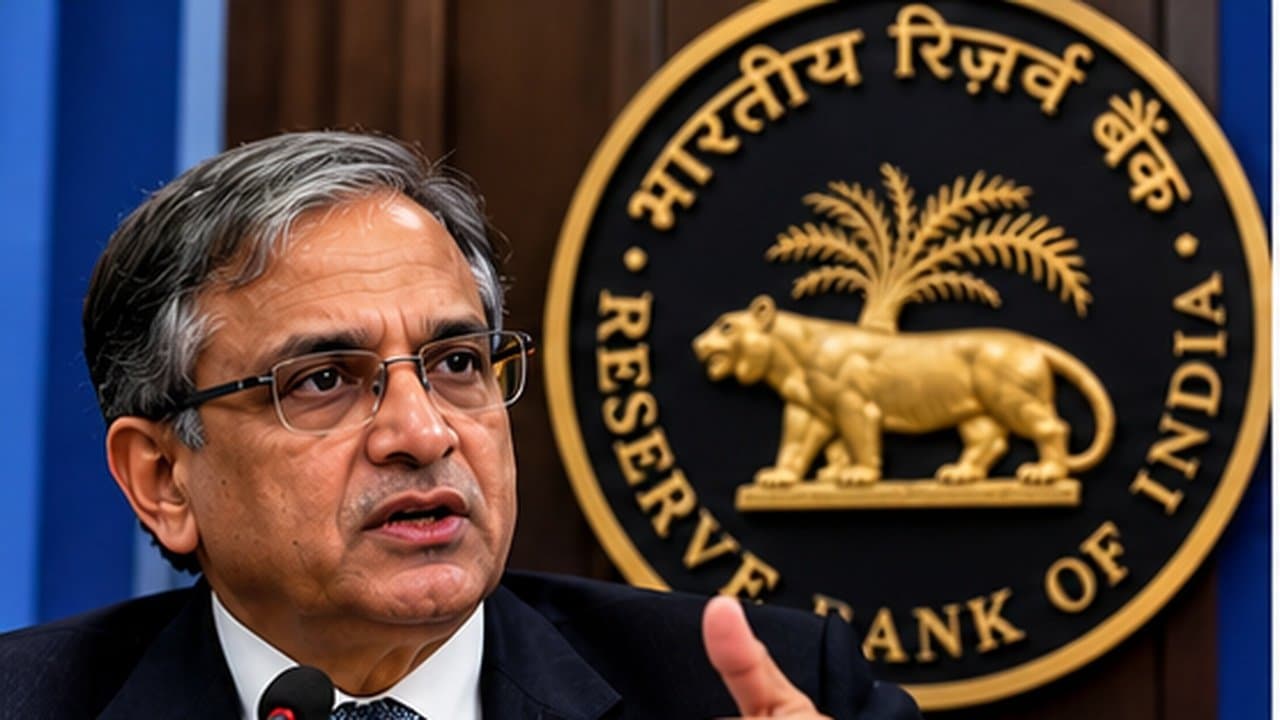
Governor Sanjay Malhotra is scheduled to announce the MPC’s decision at 10 AM IST on October 7, followed by a press conference at noon.

The repo rate currently stands at 5.25%. Most economists and market participants expect the RBI to raise it by 25 basis points to 5.50%, although a section of economists expects the central bank to leave rates unchanged.
If the RBI delivers the expected hike, it would be the first repo-rate increase since February 2023.
Why is the RBI considering a rate hike?
The biggest factor is the changing inflation environment.
India’s retail inflation rose to 4.82% in August, moving above the RBI’s 4% medium-term target for the third consecutive month. Price pressures have also become broader, rather than being limited to a small number of food items.

Higher energy prices are adding another layer of risk.
Brent crude has been trading around the $100-per-barrel mark, creating concerns over imported inflation in India, which remains heavily dependent on imported crude oil.
A sustained rise in oil prices can increase transportation and production costs and eventually feed into consumer prices.
Rupee weakness adds to RBI’s concerns
The Indian rupee is also under pressure.
On October 6, the rupee weakened to around ₹96.43 per US dollar, its weakest level in more than two months and close to its previous record low of ₹96.96 recorded in May.
Persistent foreign investor selling, higher US Treasury yields and strong dollar demand have contributed to the pressure.

The RBI has reportedly intervened in the foreign-exchange market to limit excessive volatility.
A rate hike could potentially provide some support to the rupee by making Indian assets relatively more attractive, although interest rates alone cannot determine the currency’s direction.
RBI has kept repo rate unchanged at 5.25%
The RBI has maintained the policy repo rate at 5.25% through its last four policy reviews after cutting rates by a cumulative 125 basis points during 2025. mint
At its August 2026 meeting, the MPC kept the repo rate unchanged and retained its neutral policy stance.
The October meeting therefore represents a potential turning point.
A 25-basis-point increase would signal that the RBI is becoming more concerned about inflation and external risks after a prolonged period of easing and then holding rates steady.
ALSO READ: RBI Board reviews India’s economic outlook amid global uncertainty
How much could RBI increase rates?
The dominant expectation is for a 25-basis-point increase, taking the repo rate from 5.25% to 5.50%.
A Reuters poll found that 35 out of 61 economists expected a 25-basis-point increase.
A Business Standard poll produced a similar result, with eight of 10 economists expecting a 25-basis-point hike. Business Standard
However, the possibility of a pause has not completely disappeared.
Bank of Baroda economists have argued that the RBI could wait because a hike ahead of the festive season could affect demand and may not immediately improve transmission to deposit rates.
Could this be the beginning of a rate-hiking cycle?
That is one of the biggest questions facing markets.
A 25-basis-point hike by itself would not necessarily mean that the RBI is committing to a prolonged tightening cycle.
However, investors will closely analyse Governor Malhotra’s guidance for clues about what happens next.
Some economists believe additional rate increases could follow if inflation continues to rise.
A Reuters survey found that a majority of economists expecting an October hike also anticipated another increase in December.
The RBI, however, could choose to remain data-dependent and avoid committing to a predetermined path.
What does the RBI decision mean for home-loan borrowers?
A repo-rate hike could eventually increase borrowing costs for consumers, particularly borrowers with loans linked to external benchmarks.
Banks may pass some or all of the increase through to lending rates.
For home-loan borrowers, this could mean either:
- Higher EMIs
- Longer loan tenure
- Or a combination of both
The actual impact will depend on individual banks, loan structures and how quickly lenders transmit the RBI’s rate change.
Borrowers should therefore not assume that a 25-basis-point RBI hike automatically means their EMI will rise by exactly the same proportion.
What does it mean for FD investors?
The impact could be more positive for savers.
If banks raise deposit rates in response to tighter monetary conditions, fixed-deposit investors could potentially receive better returns on new deposits.
However, banks do not necessarily increase deposit rates immediately or by the same amount as the repo rate.
Existing fixed deposits generally continue at their contracted interest rate until maturity.
Impact on stock markets
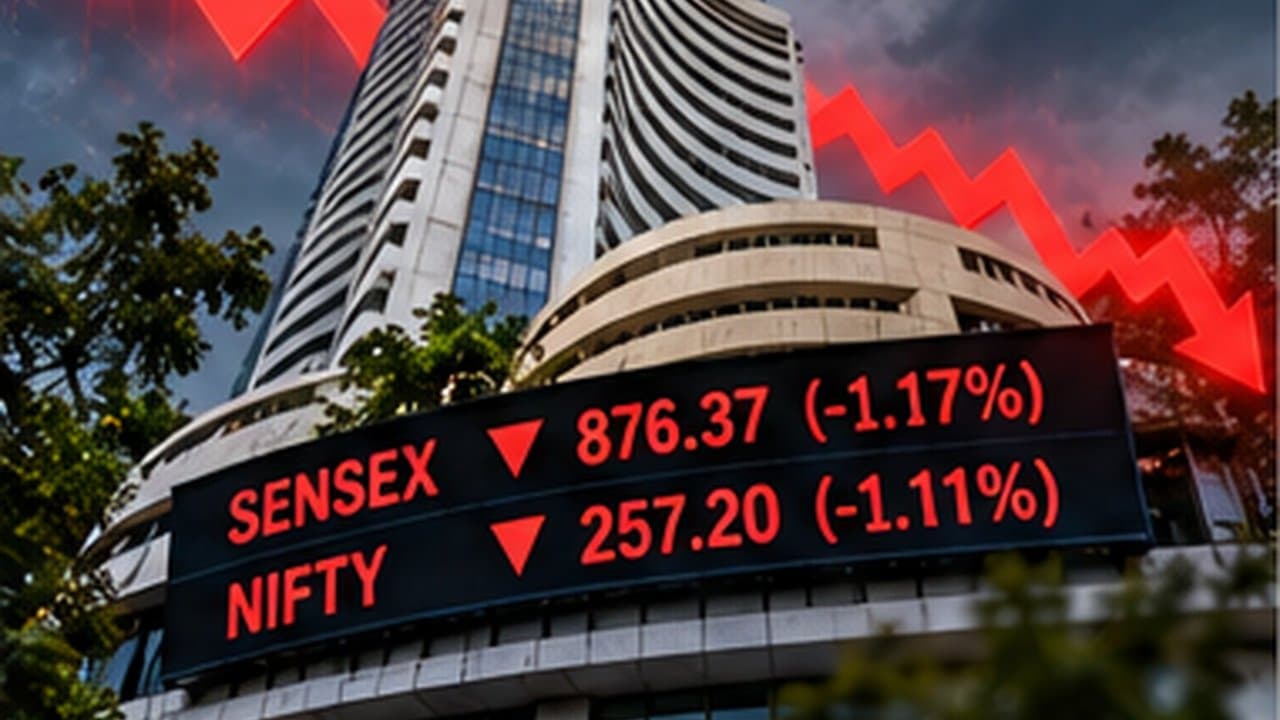
The RBI’s decision could trigger significant volatility in Indian equities.
Banks and financial stocks will be particularly sensitive to the announcement because interest rates influence borrowing demand, margins, credit growth and deposit costs.
A hike that is already fully expected could have a limited negative reaction if the RBI’s communication remains balanced.
However, a stronger-than-expected tightening signal could pressure rate-sensitive sectors.
On October 6, Indian equities were already trading higher ahead of the decision, with the Nifty 50 up 0.35% and Sensex up 0.34% during morning trade.
RBI faces a difficult balancing act
The central bank is currently caught between two competing priorities.
On one side is inflation, which has moved higher and could receive another boost from expensive crude oil.
On the other side is economic growth, which remains relatively resilient.
India’s GDP growth for the April-June quarter was reported at 7.8%, considerably stronger than the RBI’s earlier projection for that quarter. Some economists therefore expect the central bank to revise its FY27 growth forecast upward.
This gives the RBI somewhat more room to prioritise inflation control without necessarily sacrificing near-term growth.
What investors should watch on October 7
The repo-rate number will be only one part of the RBI announcement.
Markets will closely watch:
- Repo rate: Whether it rises from 5.25% to 5.50%.
- Policy stance: Whether the RBI retains its neutral stance.
- Inflation forecast: Whether the FY27 projection is revised upward.
- Growth forecast: Whether resilient GDP growth leads to an upward revision.
- Rupee commentary: The RBI’s assessment of currency pressure.
- Liquidity management: How the central bank plans to absorb excess liquidity.
- Future rate guidance: Whether another hike could come in December.
RBI policy decision 2026: What happens next?
The October 7 decision could mark an important shift in India’s monetary-policy cycle.
A 25-basis-point hike to 5.50% is currently the market’s most widely expected outcome, but the decision has not yet been announced.
The bigger question will be whether the RBI views the move as a one-time adjustment or the beginning of a broader tightening cycle.
With inflation rising, crude oil near $100, the rupee under pressure and global bond yields elevated, the central bank has several factors to consider.
For borrowers, investors, banks and businesses, Governor Sanjay Malhotra’s guidance on the future path of interest rates may ultimately matter more than the 25-basis-point decision itself.