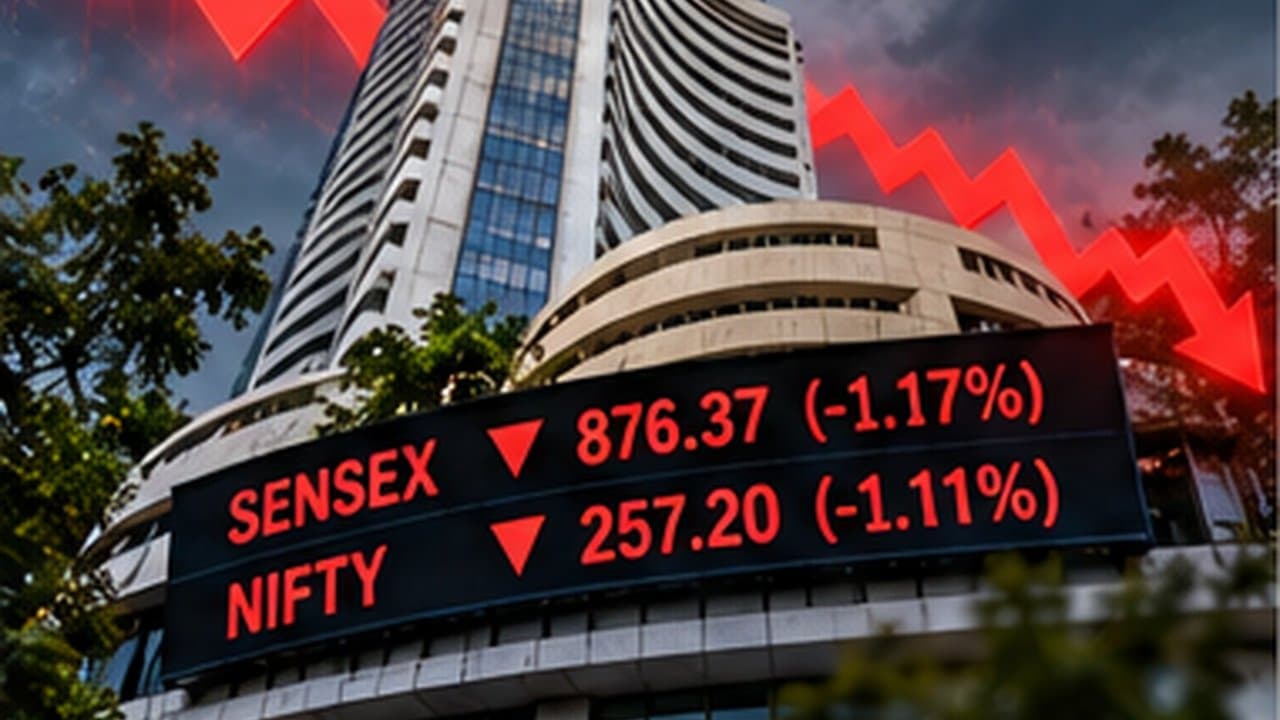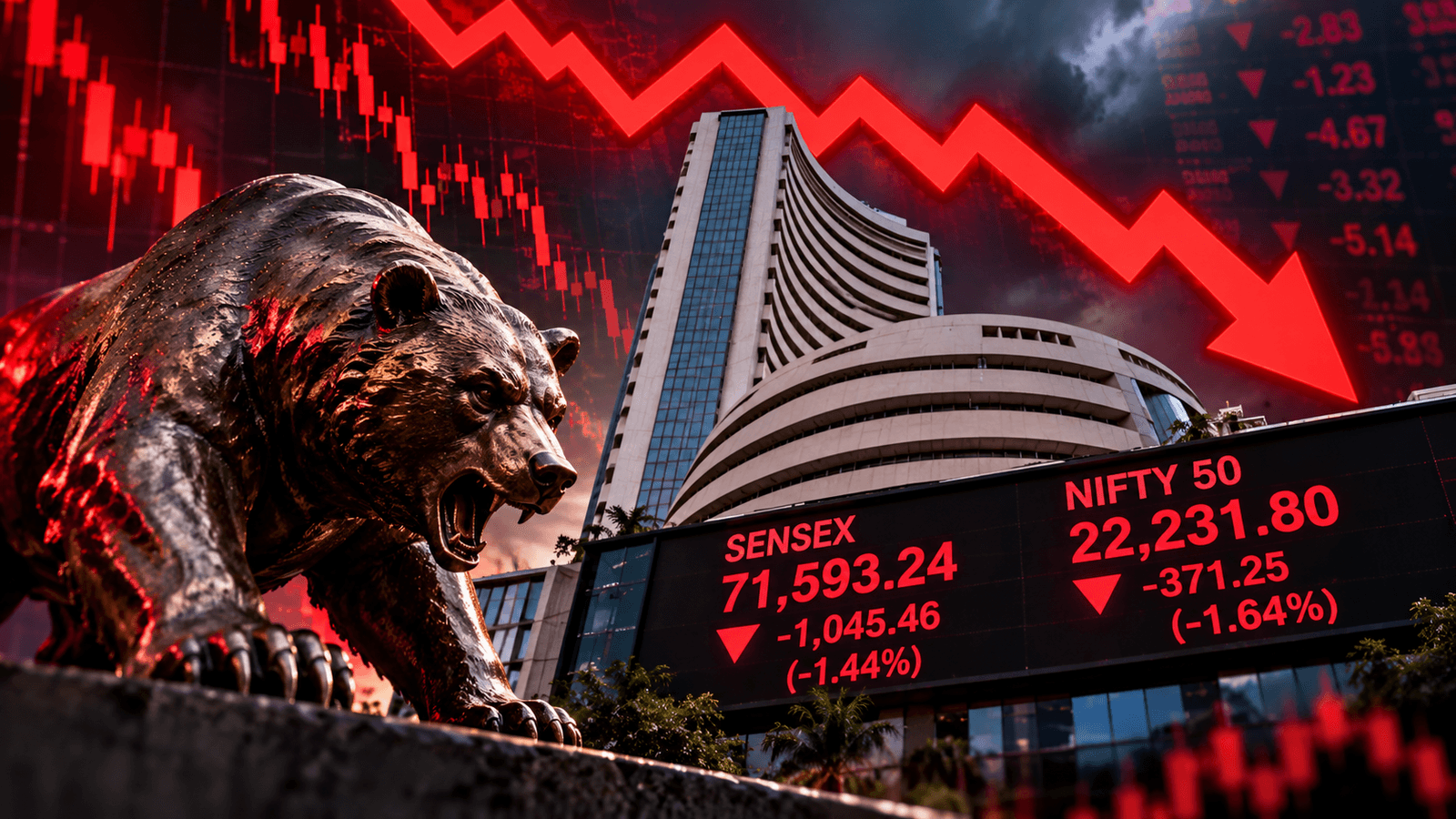
The Indian stock market witnessed a sharp sell-off on Thursday, October 8, with the Sensex plunging 1,045.46 points, or 1.44%, to close at 71,593.24. The index briefly fell to 71,327.75 during the session.
The Nifty 50 dropped 371.25 points, or 1.64%, to 22,231.80, its lowest closing level in around 18 months. The sell-off wiped out approximately ₹10 lakh crore in market capitalisation in a single session.

The decline was broad-based, with all 16 major sectoral indices ending lower. Mid-cap and small-cap stocks suffered even heavier losses, falling around 2.3% and 2.5%, respectively.
Why did the Sensex crash?
Several negative factors came together to trigger Thursday’s sell-off and almost a bloodbath in Sensex.
The biggest concern was crude oil, with Brent jumping above $104 a barrel amid renewed concerns about supply disruptions in the Middle East. Higher oil prices are particularly damaging for India because the country imports most of its crude requirement.

Expensive crude increases India’s import bill, puts pressure on the rupee and raises the risk of imported inflation.
RBI rate hike adds to pressure
Markets are also digesting the Reserve Bank of India’s latest policy decision.
The RBI raised the repo rate by 25 basis points to 5.50% and adopted a more hawkish policy stance. Investors are now concerned that higher interest rates could increase borrowing costs and put pressure on corporate valuations.

The possibility of further tightening has added to the nervousness in equity markets.
ALSO READ: RBI repo rate hike: What 5.50% means for your EMI, FD and stock market?
FII selling becomes a major problem
Foreign investors have also been aggressively reducing their exposure to Indian equities.
Reuters reported that foreign investors had sold a net ₹469.9 billion, or about $4.86 billion, over nine sessions, taking their 2026 outflows to a record roughly $30.4 billion.
The heavy selling is particularly significant because domestic institutional investors have been buying shares and providing support to the market. However, the scale of foreign selling has made it increasingly difficult for domestic buying to prevent declines.
Rupee approaches record low
The currency market is adding another layer of stress.
The rupee ended Thursday near ₹96.78 per US dollar, just above its record low of ₹96.96 reached in May. The currency has lost more than 7% against the dollar this year.
A weaker rupee makes imported crude more expensive, creating a potentially damaging cycle of higher energy costs, inflationary pressure and further currency weakness.
What happens next?
The market is now entering a crucial phase as the September-quarter earnings season begins. The Sensex crash has led to sparking fears in many and uncertainties around the future.
TCS has kicked off the earnings season, with investors looking for evidence that corporate earnings can withstand higher oil prices, tighter monetary policy and elevated global borrowing costs.
For now, the combination of expensive crude, FII outflows, rupee weakness, higher bond yields and tighter RBI policy remains the biggest threat to Indian equities.