Zetwerk is not a simple marketplace, and it is not a conventional factory. It is a technology-enabled manufacturing company that owns plants, manages thousands of suppliers, and books the value of the goods it helps produce. Its ₹5,012-crore IPO values the company at about ₹25,583 crore at the upper end of the band. The test is whether public investors see it as a platform or as a manufacturer.
What Zetwerk does
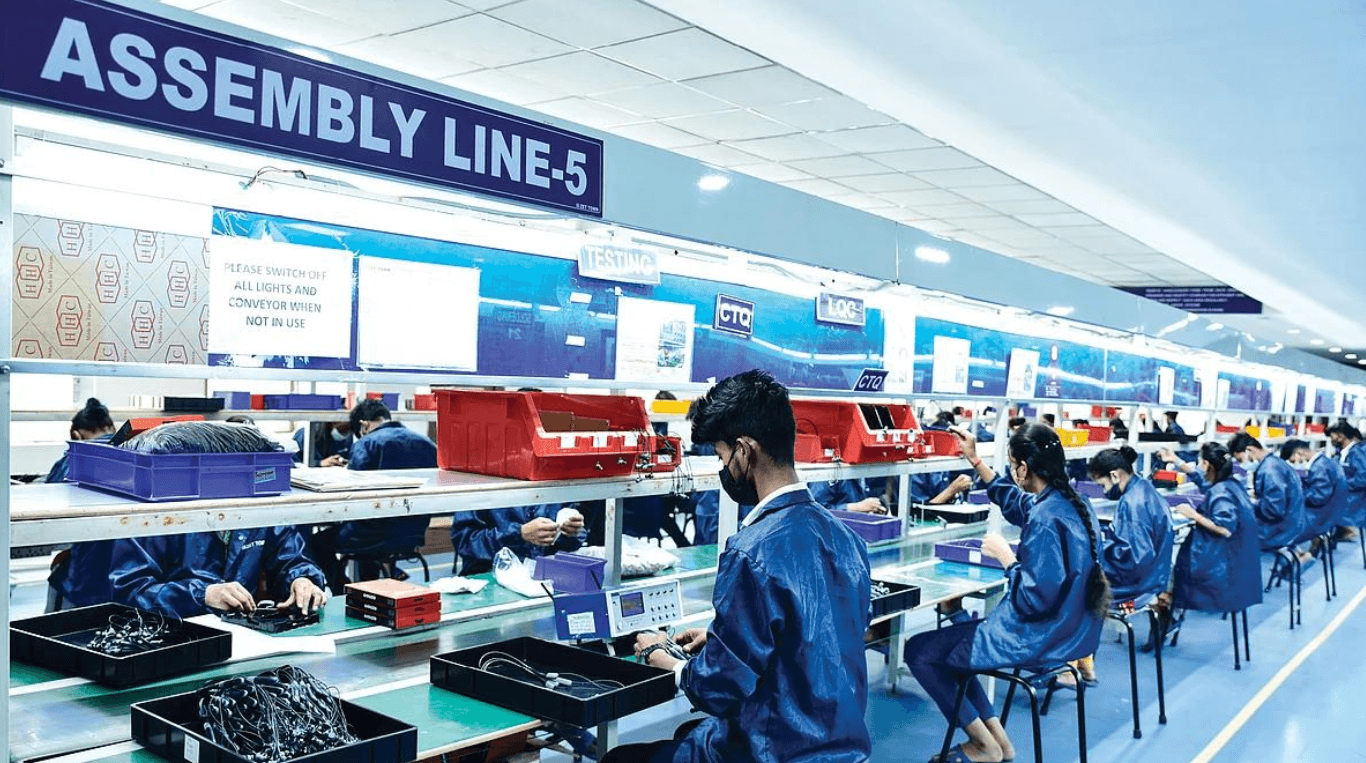
Zetwerk connects businesses with factories and handles sourcing, production, quality control, logistics, and delivery through Zetwerk OS. It also increasingly makes products in its own plants. As of March 2026, it had 26 owned manufacturing sites across India, Spain, Germany and the United States and worked with 6,979 third-party suppliers. Its customers span renewable energy, power transmission, electronics, AI infrastructure, aerospace, defence and oil and gas, and include Siemens Gamesa, Acer India, boAt, NextPower and CG Power.
The IPO at a glance
The issue opens on 15 October and closes on 19 October, with anchor bidding on 14 October. Allotment is expected by 21 October and listing on 23 October. The price band is ₹143–₹151 per share.
The final red herring prospectus, filed on 11 October, raised the fresh issue from ₹2,600 crore to ₹2,830 crore. It also expanded the offer for sale by 49% to 14.45 crore shares (about ₹2,182 crore), taking the total to about ₹5,012 crore. Pre-pricing reports had pointed to a valuation near ₹27,000 crore, and Bloomberg reported a planned raise of up to $525 million before the price band was set.
SEBI issued its observations in July, and Zetwerk filed its updated draft red herring prospectus in August. The book-running lead managers include Kotak Mahindra Capital, Goldman Sachs (India), Morgan Stanley India, Avendus, JM Financial, HSBC Securities and Pantomath Capital.
The valuation question
If Zetwerk is a platform, investors may pay a higher multiple, since platforms can scale without adding factories, inventory, and capital in proportion. If it is a manufacturer, it will be compared with listed peers like Dixon Technologies, Kaynes Technology, Syrma SGS, Avalon Technologies and Cyient DLM. These companies generally run on lower margins and higher working-capital needs, which makes a platform-style valuation hard to justify.
At about ₹25,583 crore, Zetwerk is priced at roughly 1.6 times FY26 revenue. That looks modest for a tech company, but less so for a manufacturer with a 6% adjusted EBITDA margin in its manufacturing business, a consolidated margin of about 2.65% and negative operating cash flow.
Rahul Sharma, head of research at Equity 99, told Inc42 that ₹24,000–₹28,000 crore is a reasonable range based on listed peers. Another analyst argued for about 1.6 times enterprise value to revenue because Zetwerk records gross revenue. These are analyst estimates, not company guidance.
Why gross revenue matters
FY26 operating revenue rose 40.4% to ₹15,913.3 crore from ₹11,331.9 crore in FY25, according to Inc42. But this is gross revenue. Zetwerk books the full value of the goods made through its network, not just the fee it earns on them.
That matters because the margins are thin. The Manufacturing Business earned an adjusted EBITDA margin of 6.03% in FY26, and the consolidated margin was only about 2.65%, as The Economic Times reported. Much of that ₹15,913 crore passes straight through to materials, suppliers, labour and logistics, so it is nothing like software-style revenue.
Where the revenue comes from
The Manufacturing Business contributed ₹9,374.7 crore, or 58.9% of FY26 revenue, and grew 50% year on year. The Ecosystem Business, branded Terra91, contributed ₹6,538.6 crore, per Zetwerk’s SEBI filing.
Energy Products was the biggest piece of the Manufacturing Business at ₹6,508 crore, or 69.4% of its revenue, Indian Startup News reported. So Zetwerk’s growth is closely tied to renewable energy, power transmission and AI infrastructure, which are attractive sectors but also capital-intensive and cyclical.
Zetwerk is becoming more factory-like

Zetwerk started as an asset-light platform, but its own plants are gaining weight. Own facilities generated ₹3,110 crore in FY26, or 33.17% of Manufacturing Business revenue, up from 28.82% in FY25. Third-party suppliers still accounted for 66.83%, Multibagg reported.
A pure marketplace would lean almost entirely on outside suppliers. Zetwerk is moving the other way. Owning factories gives it more control over quality, delivery and capacity, but it also brings higher capital needs, inventory risk and fixed costs. The supplier network has its own risk: Zetwerk depends on outside manufacturers for capacity, quality and delivery, and failures there can mean delays, penalties or lost customer trust.
The cash-flow problem
Zetwerk has to spend before it gets paid. It buys materials, holds inventory, pays suppliers and then waits for customers. Operating cash flow has been negative for three years running: an outflow of ₹281.5 crore in FY24, ₹386.3 crore in FY25 and ₹681.5 crore in FY26, Moneycontrol reported.
The FY26 balance sheet shows why: inventory of ₹1,249.6 crore, trade receivables of ₹2,329.9 crore, trade payables of ₹2,199.3 crore and total borrowings of ₹1,936.16 crore.
That makes the fresh issue important. Under the RHP, Zetwerk plans to use ₹1,300 crore to repay company-level borrowings and ₹860 crore to repay debt at nine subsidiaries, ₹2,160 crore in all. The rest goes to inorganic growth and general corporate purposes, StartupFox reported.
Crisil said in June that Zetwerk had ₹3,200 crore of cash and equivalents at the end of March 2026, of which ₹1,900 crore was unencumbered, per The Financial Express. That cushions the picture, but it doesn’t remove the working-capital demand.
The order book
Zetwerk’s strongest argument is its order book. The Manufacturing Business order book stood at ₹12,370 crore at the end of FY26, up from ₹8,629 crore in FY25 and ₹6,170 crore in FY24. New orders worth ₹15,393 crore came in during FY26 alone, Inc42 reported. Crisil expects the order book to be executed over the next 12–18 months, The Economic Times reported.
Retention is also strong. Repeat customers generated 80.15% of Manufacturing Business revenue in FY26, and net revenue retention was 120%, IndianWeb2 reported.
But an order book is not cash flow. Executing those orders may mean more inventory, more credit to customers, and longer waits for payment.
Profitability is improving, slowly
Adjusted EBITDA rose from ₹97 crore in FY24 to ₹322.6 crore in FY25 and ₹421.3 crore in FY26. Adjusted profit before tax turned positive at ₹45.7 crore in FY26, from a loss of ₹149.2 crore in FY25, Kotak Neo reported.
The statutory net loss, however, widened to ₹1,606.1 crore in FY26 from ₹370.7 crore in FY25, The Economic Times reported. Zetwerk blames two one-time, non-cash adjustments made ahead of the IPO: share-conversion adjustments and an impairment on its discontinued civil infrastructure business. Even so, the company still had a FY26 loss before exceptional items and tax of ₹81 crore.
The trend has continued this year. In the June 2026 quarter, revenue grew 55% year on year to ₹4,118 crore, while losses from continuing operations narrowed to ₹64 crore from ₹881 crore, TradingView reported.
Crisil has given Zetwerk an “A-/Negative” rating on a proposed NCD issue and reaffirmed it on existing facilities, citing risks from the exit of the civil EPC business. It’s a reminder that lenders care about cash generation, not just revenue growth.
Conclusion
Zetwerk uses software to coordinate a large supplier network, but it increasingly owns factories, carries inventory, and funds working capital. At about ₹25,583 crore, the IPO is a bet that the ₹12,370-crore order book, fast revenue growth and improving adjusted EBITDA outweigh negative operating cash flow, thin margins and supplier dependence. The FY26 statutory loss is largely one-time, but the cash burn is not.
If investors value Zetwerk like a manufacturer, the price looks demanding. If they value it like a platform, the cash-flow numbers make that hard to defend. The IPO will show which story the market believes.
Read More: Flipkart’s Redomiciliation: Why Its Legal Home Matters for an Indian IPO